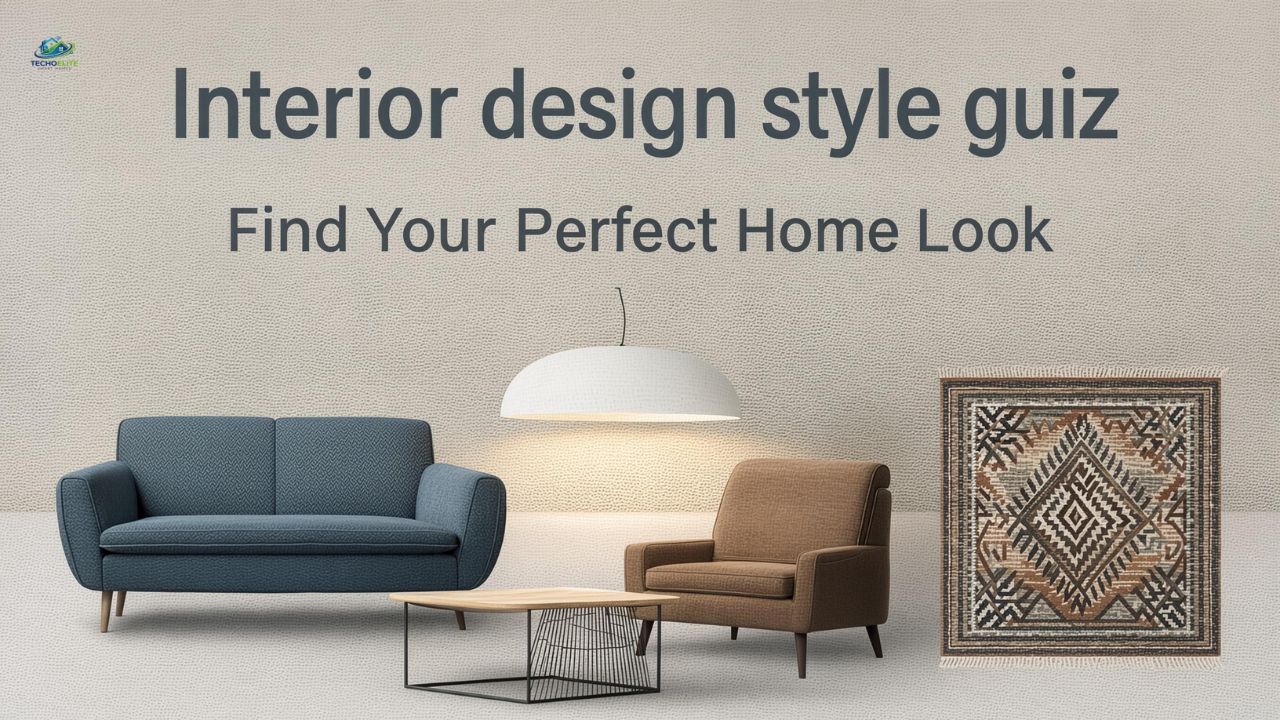
Ever walk into a room and think, “This is pretty… but it still doesn’t feel like me”? That little disconnect is exactly why an interior design style quiz can be surprisingly helpful.
Instead of guessing between modern, farmhouse, boho, traditional, coastal, industrial, or Japandi, a good quiz helps you notice your real preferences: the colors you reach for, the furniture shapes you love, the mood you want at home, and the kind of space that makes you exhale.
This matters because decorating without direction gets expensive fast. You buy a sofa you like, then a rug you like, then curtains you like, and somehow they all argue with each other. A clear style profile does not box you in; it gives your home a stronger voice.
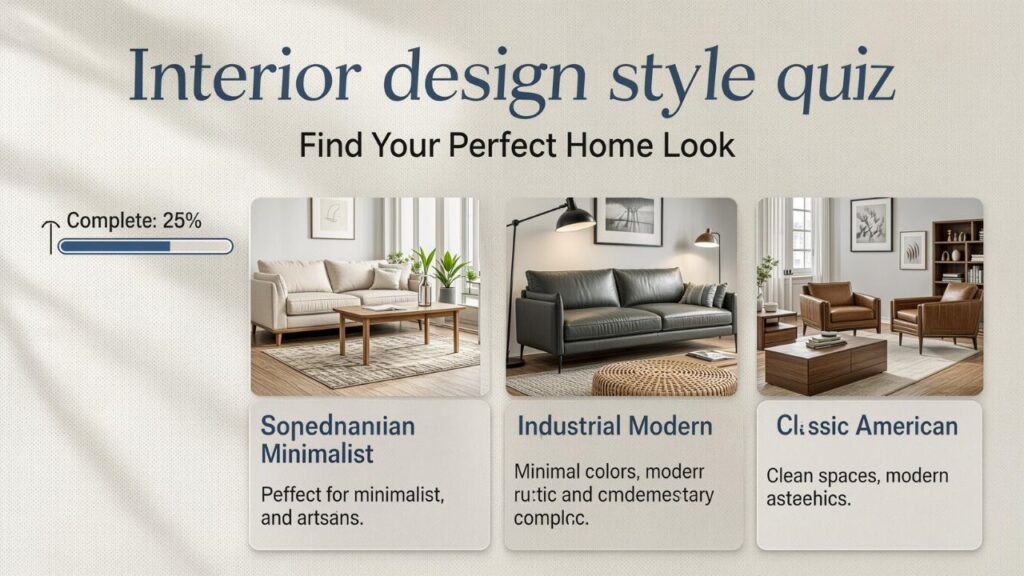
Table of Contents
- Why an interior design style quiz Helps You Decorate Better
- How This Quiz Works
- Take the interior design style quiz
- Scoring Your Results
- Style Profiles and What They Mean
- How to Use Your Quiz Result in Real Rooms
- Background, Evolution, and Financial Insights
- Budget-Friendly Ways to Decorate by Style
- Common Mistakes to Avoid After Taking a Style Quiz
- FAQs
- Conclusion
Why an interior design style quiz Helps You Decorate Better
Most people do not struggle because they have no taste. They struggle because they have too much input. Pinterest boards, Instagram reels, showroom displays, influencer homes, furniture ads, and renovation shows all blur together. One minute you love a white linen sofa, the next you are saving a dark green velvet sectional, and by Saturday you are convinced you need limewash walls.
A quiz slows that down. It turns scattered reactions into a pattern. Maybe you keep choosing natural wood, warm whites, linen, and simple shapes. That points toward Scandinavian, Japandi, organic modern, or warm minimalist design. Maybe you choose layered rugs, old books, brass lamps, velvet, and patterned wallpaper. That leans traditional, eclectic, vintage, or English cottage.
Current design research also supports this move toward personal, emotionally supportive homes. ASID’s 2025 Trends Outlook says interior design is increasingly focused on well-being, sustainability, inclusivity, joy, personal narratives, authenticity, craftsmanship, and timelessness rather than one narrow idea of luxury.
That is why the best style quiz is not about labeling you forever. It is about helping you decorate with more confidence, less waste, and fewer “Why did I buy this?” moments.
Definition: what is a design style quiz?
A design style quiz is a guided set of questions that identifies your decorating preferences based on visual taste, lifestyle needs, color comfort, furniture choices, material preferences, and the emotional mood you want your home to create.
The result is usually a primary style, sometimes with a secondary style. For example, your main style might be modern farmhouse, but your secondary style could be coastal. That combination would suggest warm wood, casual white walls, relaxed textiles, and light blue or sandy accents.
How This Quiz Works
This quiz is designed for real homes, not showroom fantasy. It considers how you want to live, not just what looks good in a perfect photo. You will answer 15 questions. For each question, choose the option that feels most like you. Do not overthink it. Your first instinct is usually the most honest.
Each answer corresponds to a style letter. At the end, count which letter you chose most often. If two letters tie, you probably have a blended style, which is completely normal. Most beautiful homes are not pure style categories. They are layered.
Style letters used in this quiz
| Letter | Style direction | General mood |
|---|---|---|
| A | Modern Minimalist | Clean, calm, uncluttered |
| B | Modern Farmhouse | Warm, relaxed, practical |
| C | Bohemian Eclectic | Creative, layered, expressive |
| D | Traditional Classic | Polished, timeless, elegant |
| E | Coastal Casual | Airy, soft, breezy |
| F | Industrial Urban | Raw, bold, architectural |
| G | Japandi / Organic Modern | Peaceful, natural, refined |
| H | Vintage Cottage | Charming, collected, nostalgic |
Before you start
Think about how your home should feel on a normal Tuesday evening. Not when guests arrive. Not when the whole house is cleaned for photos. Just a real night. Do you want quiet and minimal? Cozy and layered? Bright and breezy? Rich and classic? Creative and colorful?
That feeling is the heart of your style.
Take the interior design style quiz
Grab a note app, a scrap of paper, or just keep count in your head. Choose one answer for each question.
1. What kind of room instantly makes you feel at ease?
A. A simple room with clean lines, hidden storage, and very little clutter
B. A cozy room with wood accents, soft neutrals, and comfortable seating
C. A colorful room with plants, art, pattern, books, and collected treasures
D. A refined room with symmetry, quality furniture, and elegant details
E. A light-filled room with white walls, soft blues, natural fibers, and relaxed fabrics
F. A bold room with brick, metal, concrete, leather, and dramatic lighting
G. A calm room with natural materials, low furniture, warm wood, and soft texture
H. A sweet, layered room with florals, vintage finds, painted furniture, and charm
2. Which color palette are you most likely to choose?
A. Black, white, gray, and one controlled accent color
B. Warm white, beige, taupe, black, and natural wood
C. Terracotta, mustard, teal, rust, cream, and leafy green
D. Navy, cream, burgundy, forest green, gold, and warm neutrals
E. White, sand, sea glass, pale blue, driftwood, and soft gray
F. Charcoal, black, cognac, steel, brick red, and concrete gray
G. Warm white, oatmeal, soft gray, clay, olive, and pale wood
H. Sage, buttercream, dusty rose, faded blue, ivory, and antique brown
3. What type of sofa catches your eye first?
A. A low, streamlined sofa with slim arms
B. A slipcovered or deep-seated sofa that looks nap-friendly
C. A colorful velvet sofa or relaxed sectional covered in pillows
D. A tufted, rolled-arm, or tailored sofa with classic proportions
E. A white or linen-look sofa that feels light and casual
F. A leather sofa with strong lines and visible structure
G. A simple linen or wool sofa with a quiet, sculptural shape
H. A curved, skirted, floral, or antique-inspired sofa
4. Which material combination feels most like home?
A. Glass, smooth wood, matte metal, and stone
B. Oak, painted cabinets, shiplap, woven baskets, and cotton
C. Rattan, macramé, vintage rugs, ceramics, and plants
D. Mahogany, marble, brass, wool, and detailed trim
E. Linen, jute, white oak, cane, and light stone
F. Steel, exposed brick, concrete, reclaimed wood, and leather
G. Ash wood, clay, plaster, linen, stone, and paper-like textures
H. Painted wood, lace, ironstone, floral textiles, and aged brass
5. What kind of lighting do you love?
A. Recessed lighting and simple sculptural fixtures
B. Lantern pendants, black sconces, and warm table lamps
C. Woven pendants, beaded chandeliers, and colorful lampshades
D. Crystal, brass, shaded sconces, and traditional chandeliers
E. Rope, rattan, glass, and soft white lamps
F. Exposed bulbs, metal pendants, track lighting, and factory-inspired fixtures
G. Paper lanterns, soft floor lamps, and hidden warm light
H. Milk glass, pleated shades, vintage lamps, and candle-style sconces
6. What bothers you most in a room?
A. Visual clutter
B. Anything that feels cold or too formal
C. Rooms with no personality
D. Cheap-looking finishes or random furniture
E. Heavy, dark, crowded spaces
F. Overly delicate or fussy decor
G. Harsh lighting and too many shiny surfaces
H. Rooms that feel too new, sterile, or mass-produced
7. Which front entry would you choose?
A. Sleek console, round mirror, hidden shoe storage
B. Wood bench, hooks, basket, washable runner
C. Patterned rug, plants, art wall, collected bowls
D. Console table, framed mirror, lamp, floral arrangement
E. White bench, woven baskets, beachy art, soft blue accents
F. Metal console, exposed brick, leather tray, bold art
G. Low bench, ceramic vessel, natural mat, quiet lighting
H. Antique table, vintage mirror, flowers, and a charming umbrella stand
8. Which bedroom sounds most restful?
A. Platform bed, crisp bedding, almost no decor
B. Wood bed, soft quilt, warm lamps, neutral rug
C. Layered textiles, patterned pillows, plants, and art
D. Upholstered bed, matching nightstands, elegant drapery
E. White bedding, woven shades, pale blue throw, breezy curtains
F. Dark wall, leather headboard, industrial sconces
G. Low bed, linen bedding, wood slats, calm earth tones
H. Iron bed, floral quilt, vintage dresser, soft lamp glow
9. How do you shop for home decor?
A. Slowly and intentionally; only what fits the plan
B. Practical pieces first, then cozy details
C. Treasure hunting, markets, handmade pieces, global finds
D. Quality investment pieces and timeless accents
E. Light, casual, easy-care pieces that feel fresh
F. Bold statement pieces, vintage industrial finds, strong silhouettes
G. Natural, sustainable, simple pieces with texture
H. Antique shops, estate sales, flea markets, and heirlooms
10. Which kitchen would you love most?
A. Flat-panel cabinets, hidden handles, clean counters
B. Shaker cabinets, farmhouse sink, wood shelves, warm lights
C. Open shelving, colorful tile, plants, mixed chairs
D. Inset cabinets, marble counters, polished hardware
E. White cabinets, light counters, woven stools, airy windows
F. Dark cabinets, metal stools, concrete counters, brick wall
G. Pale wood cabinets, stone counters, minimal open shelves
H. Painted cabinets, skirted sink, vintage hardware, patterned floor
11. What kind of wall treatment appeals to you?
A. Smooth walls in one restrained color
B. Board and batten, shiplap, or warm neutral paint
C. Gallery walls, murals, patterned wallpaper, or textured plaster
D. Panel molding, wainscoting, classic wallpaper
E. White paint, beadboard, or soft blue-gray walls
F. Exposed brick, concrete, limewash, or dark paint
G. Clay plaster, wood slats, textured neutral walls
H. Floral wallpaper, beadboard, picture rails, and painted trim
12. What is your ideal rug?
A. Solid, tonal, or geometric with low pile
B. Neutral wool, stripe, or vintage-inspired runner
C. Colorful Moroccan, kilim, or layered rugs
D. Persian, Oriental, or bordered wool rug
E. Jute, sisal, blue-and-white stripe, or pale woven rug
F. Distressed dark rug, cowhide, or graphic pattern
G. Natural fiber, subtle texture, muted organic design
H. Faded floral, braided, hooked, or antique rug
13. Which phrase best describes your dream home?
A. Calm and edited
B. Warm and welcoming
C. Creative and soulful
D. Elegant and lasting
E. Light and relaxed
F. Strong and urban
G. Balanced and peaceful
H. Sweet and storied
14. Which decor detail do you notice first?
A. Clean lines
B. Wood tones
C. Art and textiles
D. Millwork and proportion
E. Natural light
F. Materials and structure
G. Texture and silence
H. Vintage character
15. What do you want guests to feel when they enter?
A. “This feels calm and organized.”
B. “This feels cozy and welcoming.”
C. “This feels interesting and personal.”
D. “This feels refined and beautiful.”
E. “This feels fresh and easy.”
F. “This feels bold and cool.”
G. “This feels peaceful and grounded.”
H. “This feels charming and loved.”
Scoring Your Results
Count how many times you selected each letter. Your highest letter is your primary design style. Your second-highest letter is your supporting style. If your results are close, that is not a problem. It probably means your taste is layered, which often leads to a more interesting home.
Result guide
| Mostly A | Modern Minimalist | You like clarity, breathing room, and intentional choices |
| Mostly B | Modern Farmhouse | You like warmth, comfort, practicality, and casual charm |
| Mostly C | Bohemian Eclectic | You like creativity, color, travel-inspired pieces, and personal storytelling |
| Mostly D | Traditional Classic | You like elegance, symmetry, quality, and timeless design |
| Mostly E | Coastal Casual | You like light, softness, natural fibers, and breezy comfort |
| Mostly F | Industrial Urban | You like raw materials, contrast, bold shapes, and architectural edge |
| Mostly G | Japandi / Organic Modern | You like quiet, nature, simplicity, texture, and balance |
| Mostly H | Vintage Cottage | You like nostalgia, softness, collected pieces, and cozy detail |
If you tied between two styles, combine them. A and G creates warm minimalism. B and H creates cozy cottage farmhouse. C and D creates collected traditional eclectic. E and B creates coastal farmhouse. F and A creates sleek industrial modern.
Style Profiles and What They Mean
Your result from the interior design style quiz is a starting point, not a rulebook. Use it to make decisions faster, avoid impulse buys, and understand why certain rooms make you feel good.
A: Modern Minimalist
You are drawn to clean lines, open space, and visual calm. Your home works best when every piece has a purpose. You probably dislike clutter, busy patterns, and furniture that feels too decorative.
Your best colors are white, black, charcoal, warm gray, stone, taupe, and one or two muted accents. Choose low-profile furniture, smooth cabinets, simple lighting, and large-scale art instead of many small objects.
The danger is going too cold. Add warmth with wood, textured rugs, linen, matte ceramics, and soft lighting. Minimal does not have to mean empty.
B: Modern Farmhouse
You want a home that feels easy to live in. Comfort matters. You probably love wood tables, cozy sofas, warm white walls, black or brass hardware, practical storage, and a kitchen where people naturally gather.
Your palette may include cream, greige, soft black, oak, warm brown, muted green, and aged metals. Use baskets, simple textiles, vintage-inspired rugs, and classic cabinetry.
The risk is becoming too predictable. Modern farmhouse looks best when it is personal, not copied from a catalog. Mix in art, family pieces, handmade ceramics, or one unexpected color.
C: Bohemian Eclectic
You love rooms that tell stories. Your style is layered, expressive, and emotionally rich. You may be drawn to plants, vintage rugs, woven pieces, travel finds, handmade decor, colorful pillows, books, and art.
Your palette can be broad, but it should still have anchors. Choose two or three grounding colors, then layer accents. Terracotta, ochre, teal, rust, cream, walnut, and olive work beautifully.
The danger is visual chaos. Edit occasionally. Give your favorite pieces space so they can actually be seen.
D: Traditional Classic
You appreciate proportion, quality, symmetry, and details that age well. You may love panel molding, upholstered furniture, elegant curtains, antique tables, polished lamps, and rich colors.
Your best palette includes navy, cream, camel, burgundy, forest green, warm gray, polished nickel, brass, and wood tones. Invest in good furniture shapes and timeless rugs.
The risk is stiffness. Add one relaxed element: a modern lamp, casual linen, unexpected art, or a comfortable reading chair that does not look too perfect.
E: Coastal Casual
You want your home to feel light, relaxed, and easy. You probably love natural light, soft blues, white walls, linen, jute, rattan, driftwood, pale oak, and open windows.
Your palette includes white, sand, sea glass, fog gray, soft blue, natural tan, and gentle green. Choose washable slipcovers, woven textures, breezy curtains, and unfussy furniture.
The danger is theme overload. A few coastal hints are enough. You do not need anchors, shells, and boat art in every room.
F: Industrial Urban
You like strong materials and confident design. Exposed brick, black metal, concrete, leather, reclaimed wood, oversized lighting, and dark colors probably appeal to you.
Your palette includes charcoal, black, cognac, steel gray, brick, walnut, and deep green. Use substantial furniture and statement lighting.
The risk is hardness. Industrial rooms need softness too. Add rugs, upholstery, curtains, plants, and warm lighting so the space feels livable rather than like a warehouse set.
G: Japandi / Organic Modern
You are drawn to simplicity with warmth. Your home should feel quiet, natural, and balanced. You probably like pale wood, linen, stone, clay, soft neutral palettes, low furniture, and thoughtful negative space.
Your palette includes oatmeal, warm white, taupe, soft gray, muted olive, clay, charcoal, and natural wood. Choose tactile materials over decoration.
The danger is making the home feel too sparse. Add handmade objects, textured textiles, and a few personal pieces. Calm should still feel human.
H: Vintage Cottage
You love homes that feel collected over time. You may be drawn to floral prints, old wood furniture, painted cabinets, lace curtains, antique mirrors, iron beds, soft colors, and cozy corners.
Your palette includes sage, cream, dusty blue, faded rose, butter yellow, warm brown, and antique white. Use vintage lamps, patterned textiles, framed art, and charming storage pieces.
The risk is clutter or cuteness overload. Balance sweetness with simple furniture lines and natural materials.
How to Use Your Quiz Result in Real Rooms
Taking an interior design style quiz is fun, but the real value comes afterward. Your result should help you make choices, not just give you a label.
Build a three-word design filter
Choose three words from your result. For example:
- Modern Minimalist: calm, edited, clean
- Modern Farmhouse: warm, practical, welcoming
- Bohemian Eclectic: layered, creative, soulful
- Traditional Classic: refined, timeless, balanced
- Coastal Casual: breezy, soft, relaxed
- Industrial Urban: bold, raw, structured
- Japandi / Organic Modern: peaceful, natural, tactile
- Vintage Cottage: charming, collected, gentle
Before buying anything, ask: does this piece support my three words? If not, skip it. This one habit can save money and prevent style drift.
Create a simple room formula
Most rooms need the same basic ingredients: seating, storage, lighting, surface space, texture, and personality. Your style changes how those ingredients look.
| Room element | Minimalist | Farmhouse | Boho | Traditional | Coastal | Industrial | Japandi | Cottage |
|---|---|---|---|---|---|---|---|---|
| Sofa | Low, sleek | Deep, cozy | Colorful or relaxed | Tailored | Slipcovered | Leather | Simple linen | Skirted or vintage |
| Lighting | Sculptural | Lantern-style | Woven | Brass or shaded | Glass/rattan | Metal | Paper/soft glow | Vintage lamps |
| Rug | Tonal | Neutral stripe | Kilim | Persian | Jute | Distressed | Textured neutral | Floral/faded |
| Storage | Hidden | Baskets/cabinets | Open shelves | Built-ins | Light cabinets | Metal/wood | Closed wood | Antique pieces |
| Accent | One large art piece | Wood and greenery | Plants/art/books | Mirrors/millwork | Blue accents | Brick/metal | Ceramics/stone | Florals/heirlooms |
Start with one anchor piece
Do not try to decorate an entire room at once. Start with one anchor: a sofa, rug, dining table, bed, or cabinet. Then build around it.
For example, if your result is Traditional Classic and you already own a vintage Persian rug, let that rug guide your colors. If your result is Organic Modern and you love a pale oak dining table, build around soft neutrals, linen chairs, and warm ceramics.
Make a mood board before buying
Design quizzes became popular because homeowners wanted a faster bridge between inspiration and action. Online decorating platforms, retailers, magazines, and design services use them to help people identify taste patterns and recommend products or services.
Why style quizzes became so useful
Modern shoppers see thousands of products. The problem is no longer access; it is decision fatigue. A quiz filters the noise. It helps you understand whether you are consistently drawn to warm woods, clean lines, classic silhouettes, handmade textures, or colorful pattern mixing.
Pinterest and trend platforms have also shown that people are moving toward more personalized, expressive interiors. Pinterest’s 2025 trend reporting highlighted eclectic maximalism, Rococo Revival, Castlecore, sustainable living, and playful design directions, while later 2025 reporting also pointed to personality-driven homes, vintage character, and handcrafted pieces.
That does not mean everyone should go maximalist. It means homeowners are increasingly tired of rooms that look copied and anonymous.
Financial insight: why knowing your style saves money
A clear style direction helps prevent waste. Without one, people often buy temporary fillers: a cheap coffee table that does not fit, curtains in the wrong undertone, a rug that clashes, art that feels random, or storage that solves nothing.
Professional help has a cost, but so do mistakes. Sweeten’s 2025 interior designer cost guide lists common interior designer hourly rates around $100 to $200 per hour, with high-end designers sometimes charging more; HomeAdvisor’s 2025 guide says many residential designers bill about $50 to $200 per hour.
A quiz is not a replacement for a designer on complex projects, but it can make professional conversations more productive. Instead of saying, “I don’t know what I like,” you can say, “I think I’m organic modern with a little vintage cottage, and I want the room to feel calm, warm, and collected.” That is a much better starting point.
Budget-Friendly Ways to Decorate by Style
Once you know your result, you can make smarter budget choices. Every style has pieces worth investing in and places where you can save.
Modern Minimalist on a budget
Spend on storage and lighting. Save on decorative accessories because you need fewer of them. Choose one strong lamp, one large artwork, and simple textiles. Avoid buying small clutter to “finish” the room.
Modern Farmhouse on a budget
Spend on a durable dining table, comfortable sofa, or quality rug. Save by using vintage wood pieces, simple curtains, baskets, and painted furniture. Warmth matters more than expensive accessories.
Bohemian Eclectic on a budget
This style loves secondhand shopping. Look for vintage rugs, handmade pottery, used books, baskets, plants, and art. Spend on a good sofa or bed because the rest can be layered slowly.
Traditional Classic on a budget
Spend on lamps, curtains, and one quality furniture piece. Save by buying secondhand wood furniture and updating it with polish, hardware, or upholstery. Traditional rooms can look expensive when proportions are right.
Coastal Casual on a budget
Spend on natural textures: jute rugs, linen-look curtains, woven shades, and comfortable seating. Save by keeping walls simple and using a restrained palette. Avoid cheap beach-themed decor.
Industrial Urban on a budget
Spend on lighting and strong furniture shapes. Save with reclaimed wood, secondhand leather, metal shelving, and simple black hardware. Industrial style can look great with reused materials.
Japandi / Organic Modern on a budget
Spend on fewer, better pieces. Save by decluttering, painting walls warm white, adding natural textiles, and using simple wood furniture. This style rewards restraint.
Vintage Cottage on a budget
Spend time, not just money. Estate sales, thrift stores, flea markets, and family pieces are your friends. Save by mixing painted furniture, vintage lamps, floral textiles, and framed prints.
Common Mistakes to Avoid After Taking a Style Quiz
An interior design style quiz should clarify your taste, but it can also create new confusion if you treat the result too rigidly.
Mistake 1: Buying everything in one style
A pure style can look flat. A room that is 100% farmhouse, 100% coastal, or 100% industrial may feel like a staged rental. The best rooms usually mix a main style with a supporting style.
Try an 80/20 approach. Let 80% of the room follow your primary style, then add 20% contrast. A minimalist room might need a vintage rug. A cottage room might need one clean-lined sofa. A traditional room might need modern art.
Mistake 2: Ignoring lifestyle
Your result might say Bohemian Eclectic, but if you hate dusting, hundreds of objects will exhaust you. Your result might say Coastal Casual, but if you have muddy dogs, white slipcovers may not be your happiest choice.
Style must serve real life. A beautiful room that makes you nervous is not good design.
Mistake 3: Copying colors without checking light
Paint and fabric colors change dramatically by room. A warm white in one house may look yellow in another. A gray sofa may look blue beside your flooring. Always test samples in the actual room.
Mistake 4: Forgetting scale
A sofa that looked perfect online may overwhelm your living room. A tiny rug can make the whole space feel unfinished. A small lamp on a large console looks accidental.
Measure before buying. Scale is one of the quiet differences between a room that feels “off” and a room that feels professionally considered.
Mistake 5: Decorating before decluttering
Decorating over clutter rarely works. Clear the room first. Remove what you do not use, love, or need. Then add pieces intentionally.
This is especially important for minimalist, Japandi, coastal, and traditional styles, but honestly, every style benefits from editing.
Mistake 6: Treating trends as instructions
Trends can inspire, but they should not boss you around. ASID’s 2025 trend language around joy, well-being, sustainability, inclusivity, and authenticity is more useful than chasing one viral color or furniture shape. (ASID)
Use trends as seasoning, not the whole meal.
FAQs
What is an interior design style quiz?
An interior design style quiz is a set of questions that helps identify your decorating preferences, such as color palette, furniture shapes, materials, patterns, lifestyle needs, and the mood you want your home to have.
Is an interior design style quiz accurate?
It can be accurate as a starting point, especially if the questions focus on lifestyle and repeated preferences. However, most people have blended taste, so your result should guide your choices rather than limit them.
What are the most common interior design styles?
Common styles include modern, minimalist, farmhouse, traditional, transitional, coastal, bohemian, industrial, Scandinavian, Japandi, mid-century modern, cottage, rustic, and eclectic. Many homes combine two or three of these.
What if I like more than one design style?
That is normal. Choose one primary style and one supporting style. For example, coastal farmhouse, modern traditional, organic modern cottage, or industrial minimalist. Blending styles often makes a home feel more personal.
How do I use my quiz result to decorate a room?
Start with three style words, choose a color palette, select one anchor piece, build a mood board, and shop slowly. Use your quiz result as a filter before buying furniture, rugs, lighting, and decor.
Can my interior design style change over time?
Yes. Taste changes with lifestyle, age, travel, family needs, budget, and the homes you live in. Your style may become simpler, warmer, bolder, or more traditional over time. That is part of the fun.
What is the difference between interior design and decorating?
Interior design can include layout, function, lighting, materials, construction details, and how people use a space. Decorating focuses more on furniture, color, textiles, accessories, and styling. Many home projects include both.
Do I need a designer after taking a style quiz?
Not always. For simple decorating, you may be able to use your results on your own. For renovations, layout problems, lighting plans, custom furniture, or expensive decisions, a professional designer can help prevent costly mistakes.
How can I find my style without buying anything?
Save room photos you love, then look for patterns. Notice repeated colors, furniture shapes, materials, and moods. Also pay attention to what you dislike. Your no-list is often just as useful as your yes-list.
How many times should I take a style quiz?
Take one when starting a room, moving into a new home, or feeling stuck. You do not need to retake it constantly. If your answers change after a year or two, that may simply mean your lifestyle or taste has evolved.
Conclusion
An interior design style quiz is not about putting your taste in a tiny box. It is about giving you language for what you already feel. Maybe you crave calm. Maybe you want charm. Maybe you love old things, clean lines, bold materials, soft colors, or rooms full of stories. Once you can name that pattern, decorating becomes less random and much more enjoyable.
The best homes are not perfect copies of a style category. They are personal, useful, and emotionally honest. They support your routines, hold your memories, and make ordinary days feel a little better.
So use your result as a compass. Build a mood board, choose your anchor pieces carefully, test colors in real light, and let your home evolve slowly. When the style fits your life, the room stops looking like a collection of purchases and starts feeling like a place where you truly belong.