Introduction
Great outdoor sound can change the whole mood of a backyard. With the right outdoor speaker placement, your patio, pool, deck, or garden can feel welcoming without blasting music at your neighbors.
The mistake many homeowners make is simple: they treat outdoor audio like indoor audio. Outside, there are no walls to hold sound in place, so speaker position matters even more.
A few small placement choices can make music clearer, voices easier to hear, and volume more comfortable. You do not always need louder speakers. You need better coverage.
What Is Outdoor Speaker Placement?
Outdoor speaker placement means choosing the right locations, height, angle, and spacing for speakers in an open-air area. The goal is even sound across the space without harsh volume in one spot and weak audio in another.
Unlike indoor rooms, outdoor spaces lose sound quickly. Wind, open yards, hard surfaces, pools, fences, and landscaping all affect how audio travels.
Why Outdoor Audio Needs a Different Approach
Inside a room, walls and ceilings reflect sound. Outside, sound spreads and disappears. This is why one powerful speaker on a wall often sounds loud near the house but weak across the yard.
A better method is to use several speakers at lower volume. This creates smoother sound and makes the whole area feel more natural.
Start With the Listening Zones
Before placing speakers, divide the outdoor space into zones. A zone is any area where people gather, relax, eat, swim, or talk.
Common zones include:
- Patio dining area
- Outdoor kitchen
- Poolside seating
- Fire pit area
- Garden walkway
- Covered deck
- Pergola or lounge space
Each zone may need its own speaker approach. A dining area needs soft, clear sound. A pool area may need wider coverage. A fire pit may need speakers aimed inward toward the seating.
Best Outdoor Speaker Placement for Patios
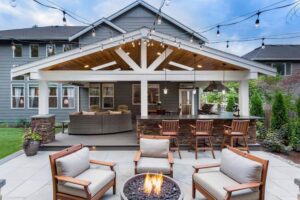
Patios are usually the easiest outdoor areas to cover because they often sit close to the house. Wall-mounted speakers can work well here when placed carefully.
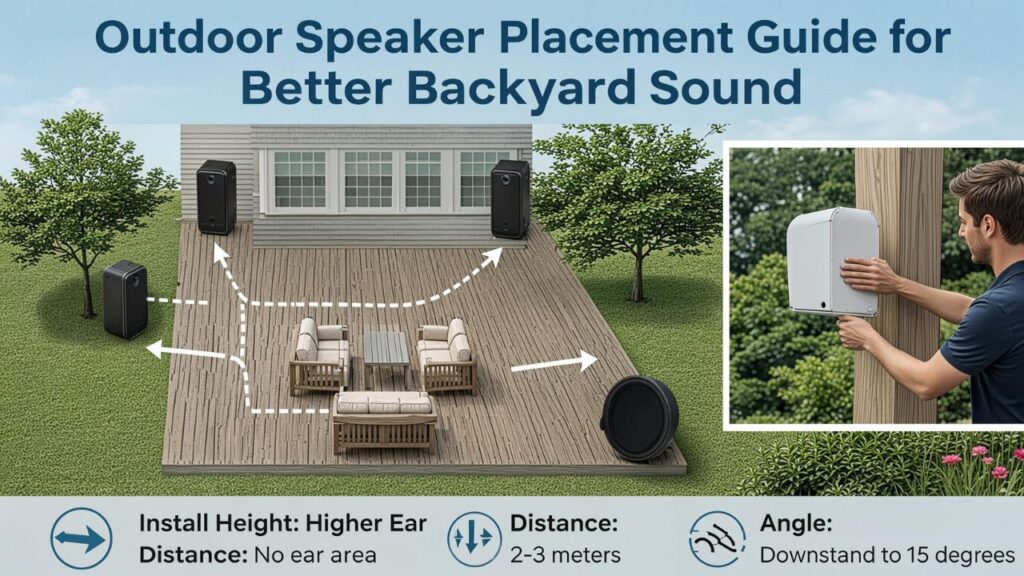
For most patios, place speakers about 8 to 10 feet high and angle them slightly downward. This helps sound reach people sitting below instead of firing over their heads.
Keep Speakers Facing the Listening Area
Do not aim speakers straight into open space. Aim them toward the patio seating or dining area. This keeps volume lower while still making audio clear.
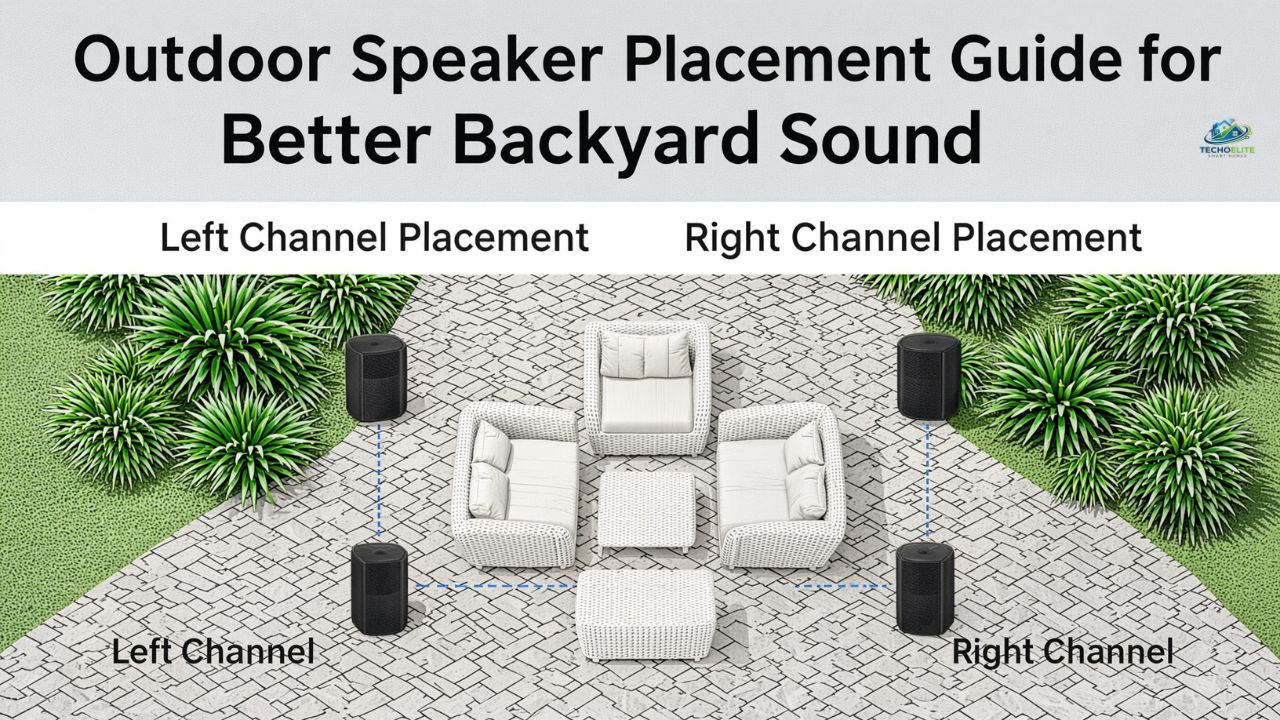
If you use two speakers, place them on opposite sides of the patio when possible. This gives a balanced left-and-right sound field.
Avoid Mounting Too Close to Corners
Corners can make sound feel boomy or uneven. Leave some space between the speaker and nearby walls, beams, or roof edges.
This is especially helpful under covered patios where sound reflections can build up.
Outdoor Speaker Placement for Decks
Decks often have railings, stairs, and open sides, so sound can escape quickly. For a small deck, two wall-mounted speakers may be enough.
For a larger deck, consider multiple smaller speakers around the perimeter. This keeps music comfortable without needing high volume.
Use the House Wall When Possible
Mounting speakers on the exterior wall is clean and practical. It also protects wiring and keeps speakers out of the way.
Angle the speakers toward the center of the deck. Avoid pointing them directly at neighboring homes.
Speaker Placement Around Pools
Pool areas need careful planning because water, open space, and safety all matter. Speakers should never be placed where they can be splashed constantly or handled by wet users.
Use weather-rated speakers and keep them away from direct water exposure when possible.
Spread Sound Around the Pool
One speaker near the house will not cover a pool evenly. It may sound loud at one end and weak at the other.
A better setup uses several speakers placed around the pool area, aimed toward the water and seating areas. Landscape speakers can be a great choice because they blend into planting beds and spread sound evenly.
Landscape Speaker Placement
Landscape speakers are designed to sit low in garden beds, around paths, or near outdoor seating. They are often used with in-ground subwoofers for fuller sound.
This type of system works best when speakers are placed around the listening area instead of all in one location.
Keep Landscape Speakers Low and Evenly Spaced
Most landscape speakers should sit close to ground level and point toward the listening area. Space them evenly so sound overlaps gently.
A common range is 8 to 12 feet apart, depending on speaker power, area size, and background noise.
How High Should Outdoor Speakers Be?
For wall-mounted outdoor speakers, 8 to 10 feet high usually works well. This keeps them safe, improves coverage, and reduces the chance of someone bumping into them.
If speakers are too high, sound may feel distant. If they are too low, nearby listeners may hear too much volume.
Angle Matters More Than Height Alone
Height is only part of the setup. Speakers should be angled toward the people listening.
A slight downward tilt helps sound land where people sit, stand, eat, and relax.
How Far Apart Should Outdoor Speakers Be?
Speaker spacing depends on the size of the area. For a small patio, two speakers may be enough. For a large backyard, several speakers are usually better.
As a simple rule, avoid placing speakers so far apart that one side sounds empty. You want smooth overlap, not separate pockets of sound.
Avoid the “One Loud Speaker” Mistake
One of the biggest mistakes in outdoor speaker placement is using one large speaker to cover the entire yard. This often creates harsh sound near the speaker and weak sound farther away.
A distributed setup sounds better. Several speakers at lower volume create a more pleasant listening experience.
Think About Neighbor-Friendly Sound
Outdoor audio should be enjoyable without becoming a problem. Speaker direction has a big effect on how far sound travels.
Aim speakers toward your home or main seating area, not toward property lines. Lower volume across more speakers is usually better than high volume from one location.
Use Structures to Your Advantage
Outdoor spaces often have useful mounting points. These may include:
- House walls
- Pergola beams
- Covered patio ceilings
- Fence posts
- Outdoor kitchen structures
- Garden walls
- Deck posts
Choose locations that are secure, protected, and close enough to the listening area.
Weather Protection and Durability
Outdoor speakers should be rated for outdoor use. Indoor speakers are not built for rain, humidity, heat, dust, or temperature changes.
Even weatherproof speakers last longer when placed under eaves, patio covers, or shaded areas.
Avoid Direct Exposure When Possible
Try not to place speakers where they receive constant sun, heavy rain, sprinkler spray, or pool splash. Protection improves performance and lifespan.
Good placement is not only about sound. It also protects your investment.
Wired vs Wireless Outdoor Speakers
Wireless speakers are convenient, but wired outdoor systems usually provide stronger and more reliable performance for permanent setups.
Wired speakers are better for larger spaces, multi-zone audio, and cleaner long-term control.
When Wireless Makes Sense
Wireless speakers can work well for small patios, renters, or temporary setups. They are easy to move and simple to use.
For serious backyard audio, wired systems usually sound more stable and polished.
Outdoor Subwoofer Placement
A subwoofer adds warmth and depth, especially in open spaces where bass disappears quickly. Outdoor subwoofers can be placed near seating areas, garden beds, or patio edges.
Do not hide a subwoofer too far from the listening zone. Bass still needs smart positioning to feel balanced.
Common Outdoor Speaker Placement Mistakes
Avoid these common issues:
- Placing speakers too far apart
- Aiming speakers at neighbors
- Mounting speakers too high without angling them down
- Using indoor speakers outside
- Relying on one speaker for a large area
- Ignoring separate listening zones
- Placing speakers where water can damage them
- Forgetting about wiring paths
Fixing these mistakes can make a basic system sound much better.
Best Setup for Small Outdoor Spaces
For a small patio or balcony, two compact outdoor speakers may be enough. Place them evenly on the wall and aim them toward the seating area.
Keep volume moderate and avoid placing speakers directly beside one chair. Balanced placement matters more than power.
Best Setup for Large Backyards
Large backyards need a more planned layout. Use multiple speakers across different zones instead of forcing one pair to cover everything.
A good layout may include wall speakers near the patio, landscape speakers around the garden, and a subwoofer near the lounge area.
Outdoor Speaker Placement for Entertaining
If you host dinners, pool parties, or family gatherings, plan for conversation as much as music. Loud audio in one spot can make guests move away.
Even sound helps people enjoy music without shouting over it.
Professional Installation vs DIY
A small outdoor speaker setup can be DIY-friendly. But larger systems need careful wiring, weather protection, amplifier matching, and zone control.
Professional installation is helpful when you want hidden wiring, several zones, smart home control, or a clean finished look.
FAQ
How many outdoor speakers do I need?
It depends on the size of your space. A small patio may need two speakers, while a large backyard may need four, six, or more.
What is the best height for outdoor speakers?
Most wall-mounted outdoor speakers work well at 8 to 10 feet high, angled slightly downward toward the listening area.
Should outdoor speakers face the house or the yard?
In most cases, they should face the listening area and away from neighbors when possible. This keeps sound clearer and more controlled.
Can I put outdoor speakers near a pool?
Yes, but use weather-rated speakers and keep them away from direct splash zones. Safety and proper installation matter around water.
Are landscape speakers better than wall speakers?
Landscape speakers are better for wide yards and garden areas. Wall speakers are often better for patios, decks, and areas close to the house.
How far apart should outdoor speakers be?
Many outdoor systems work well with speakers spaced 8 to 12 feet apart, but the right distance depends on the speaker type and space.
Do outdoor speakers need a subwoofer?
Not always. A subwoofer helps if you want fuller music, especially in larger open areas where bass can fade quickly.
Can outdoor speakers stay outside all year?
Outdoor-rated speakers are built for weather, but protected placement helps them last longer.
Conclusion
Great outdoor sound starts with thoughtful planning. The best systems do not simply play louder. They cover the space evenly, protect the equipment, and make music feel natural.
With smart outdoor speaker placement, your backyard can become a more comfortable place to relax, entertain, and enjoy every season.