
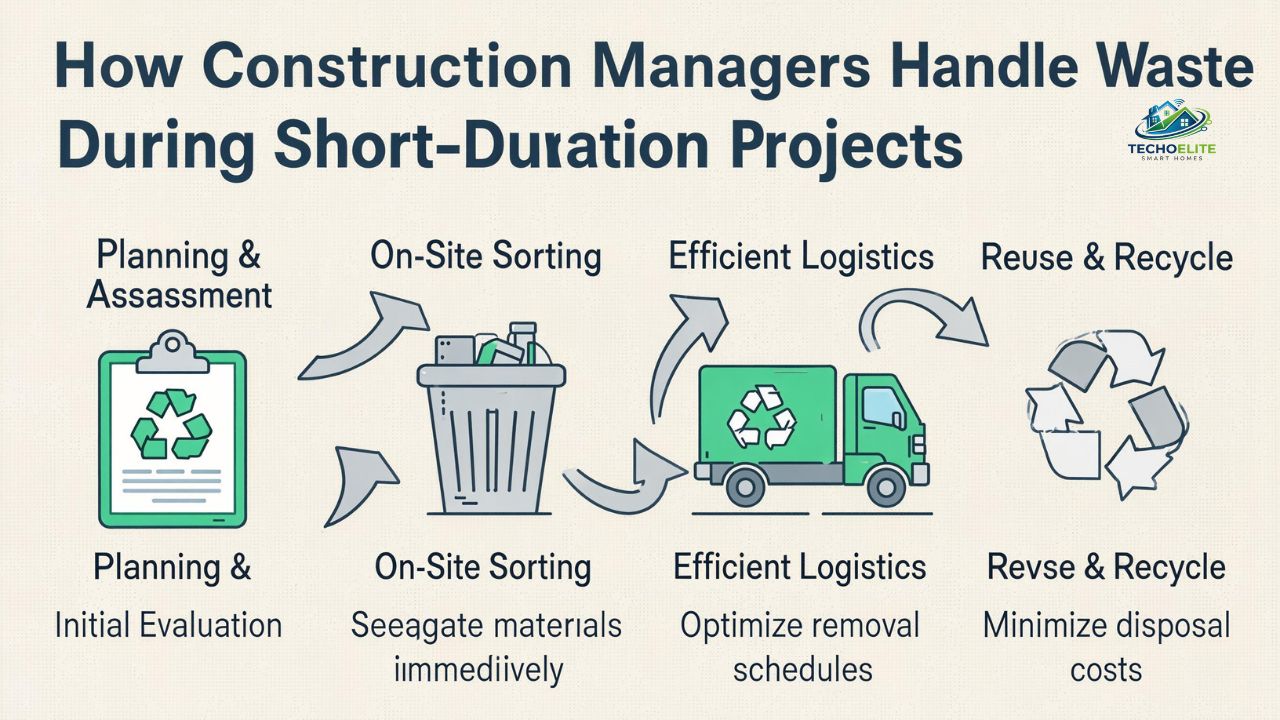
Short-duration construction projects move fast and leave little room for inefficiency. Whether it’s a quick commercial buildout, a retail refresh, or a targeted renovation, construction managers are working against tight deadlines where every day matters. In these environments, waste handling cannot be an afterthought. It must be planned and executed with the same level of precision as the construction work itself.
Even though these projects are shorter in duration, they often generate debris at a rapid pace. Demolition, installation, and finishing phases may overlap, creating continuous waste streams that need to be managed in real time. Without a clear strategy, debris can quickly slow down progress and interfere with critical tasks. For construction managers, integrating waste handling into daily operations is essential for keeping short-term projects on schedule.
Why Short-Duration Projects Require Immediate Waste Solutions
Unlike long-term builds, short-duration projects do not allow time for debris to accumulate and be addressed later. Work phases are compressed, and crews often operate back-to-back to meet deadlines. This creates a steady flow of waste that must be handled immediately to prevent disruptions.
If debris is not removed quickly, it can limit available workspace and reduce productivity. Crews may need to pause work to clear areas or navigate around clutter, which slows down the overall pace of the project. Construction managers must ensure that waste removal is continuous and aligned with the speed of the job.
Immediate disposal solutions help maintain momentum and prevent delays.
Planning Waste Management Before Work Begins
Effective waste handling on short-duration projects starts before any work begins. Construction managers should evaluate the scope of the project and estimate how much debris will be generated during each phase. This includes identifying the types of materials involved and how quickly they will accumulate.
Planning ahead allows managers to schedule container delivery, determine placement, and coordinate removal in advance. This preparation ensures that disposal capacity is available from day one and eliminates the need for last-minute adjustments.
Starting with a clear plan helps maintain efficiency throughout the project.
Preparation is critical for fast-paced environments.
Using Construction Dumpsters for Centralized Disposal
A centralized disposal system is essential for managing waste on short-term projects. Instead of creating multiple staging areas, construction managers can direct all debris to a single container. This simplifies cleanup and ensures that all trades follow the same process.
Working with a service like construction dumpster rental provides a reliable way to handle waste throughout the project. Having a dedicated container on-site allows crews to remove debris immediately, keeping work areas clear and functional.
Centralized disposal reduces confusion and improves coordination across the site.
Consistency helps maintain a steady workflow.
Coordinating Waste Removal with Project Phases
Even on short-duration projects, different phases generate different types of debris. Early demolition may produce large volumes of material, while later stages involve smaller but continuous waste from installation and finishing.
Construction managers should align waste removal schedules with these phases to ensure that containers are available when needed and emptied at the right time. This prevents overflow and ensures that disposal capacity matches the pace of work.
Coordinating removal with project phases helps maintain efficiency and supports smooth transitions.
Timing plays a key role in keeping projects on track.
Strategic Placement to Minimize Time Loss
Placement of the dumpster is especially important on fast-moving projects. If the container is too far from active work areas, workers spend more time transporting debris, which reduces productivity. However, poor placement can also block access or interfere with other operations.
Construction managers must find a balance by positioning the container close enough for easy access while keeping pathways clear for crews and equipment. Strategic placement reduces unnecessary movement and helps maintain a smooth workflow.
Every saved step contributes to meeting tight deadlines.
Thoughtful placement improves efficiency.
Maintaining Continuous Debris Flow
One of the most effective strategies for managing waste on short-duration projects is to maintain a continuous flow of debris out of the site. Instead of allowing materials to accumulate, crews should remove waste as it is generated.
This approach keeps work areas clear and reduces the need for large cleanup efforts that can slow down progress. Continuous removal also ensures that the site remains organized, which is critical for maintaining speed.
Keeping debris moving helps prevent bottlenecks and supports steady progress.
Consistency is essential for fast-paced work.
Reducing Labor Through Efficient Handling
Labor efficiency is critical on short-duration projects where time is limited. Handling debris multiple times adds unnecessary steps and slows down productivity. Construction managers should focus on minimizing handling by encouraging direct disposal into the container.
By eliminating staging and double handling, crews can spend more time on construction tasks and less time on cleanup. This improves productivity and helps keep the project on schedule.
Efficient handling practices support both speed and cost control.
Less movement leads to better results.
Coordinating Across Multiple Trades
Short-term projects often involve multiple trades working in quick succession or at the same time. Without coordination, debris from one trade can interfere with another’s work, creating delays and confusion.
Construction managers should establish clear expectations for waste handling and ensure that all crews follow the same disposal process. This includes using the designated container and maintaining clean work areas.
Consistency across trades improves coordination and helps maintain a steady workflow.
Clear communication supports efficient operations.
Adapting to Changes Quickly
Even short-duration projects can experience unexpected changes, such as additional demolition, design adjustments, or unforeseen issues. These changes can increase the amount of debris generated and require adjustments to the waste management plan.
Construction managers must be prepared to adapt quickly by scheduling additional pickups or modifying container usage as needed. Flexibility ensures that waste handling continues to support the project despite changing conditions.
Adapting quickly helps maintain momentum and prevent disruptions.
Preparation supports better outcomes.
Avoiding Common Waste Management Mistakes
Several common mistakes can disrupt waste handling on short-duration projects. These include delaying container delivery, underestimating debris volume, and failing to coordinate removal with the pace of work.
Another frequent issue is allowing debris to accumulate instead of removing it continuously. These problems can slow down progress and create unnecessary challenges.
Avoiding these mistakes requires proactive planning and consistent attention to site conditions.
A structured approach helps maintain efficiency throughout the project.
Supporting Project Speed and Completion
Effective waste management plays a direct role in how quickly a short-duration project can be completed. When debris is handled efficiently, crews can work without interruption, transitions between phases are smoother, and the site remains organized.
This leads to faster completion times and better overall performance. Construction managers who prioritize waste handling gain an advantage in meeting tight deadlines.
Efficiency improves when disposal is integrated into daily operations.
Handling waste during short-duration construction projects requires careful planning, coordination, and continuous attention. The fast-paced nature of these jobs leaves little room for inefficiency, making effective waste management essential.
By using centralized containers, coordinating removal with project phases, and maintaining continuous cleanup, construction managers can keep projects moving smoothly. Strategic placement, efficient handling, and adaptability further support success.
When waste management is treated as a core part of the project strategy, it becomes a powerful tool for maintaining speed, reducing delays, and delivering successful results on time.