Introduction
A great movie room does more than play films. It pulls you in, quiets the outside world, and makes every seat feel like the best seat in the house.
That is why home theater design philadelphia has become such a smart upgrade for homeowners who want comfort, entertainment, and long-term value in one space.
Philadelphia homes come in many styles, from classic rowhomes to modern townhouses and larger suburban properties. Each space needs a thoughtful plan for sound, screen size, lighting, seating, wiring, and smart control.
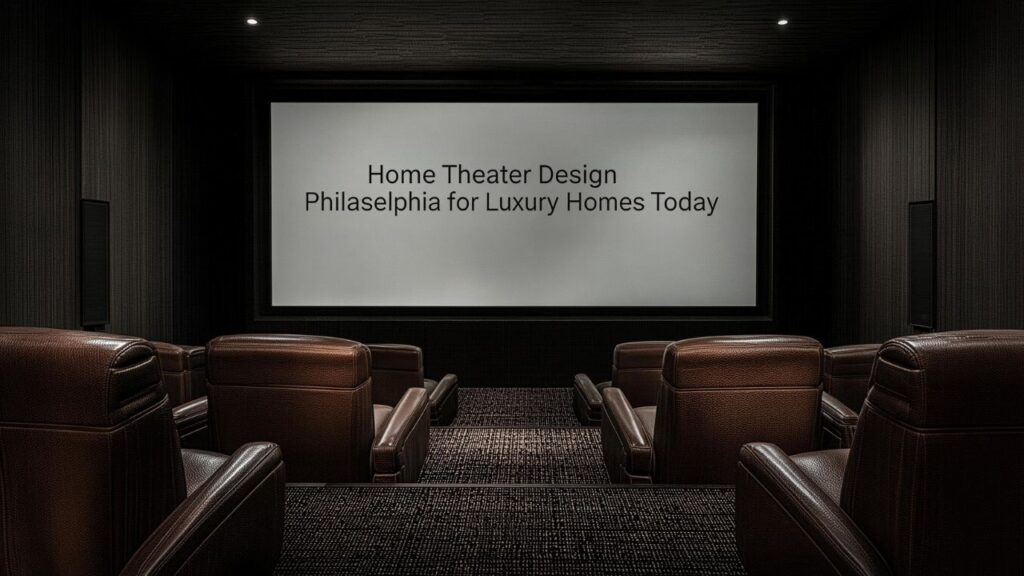
A well-designed theater is not just about buying the biggest TV. It is about building a room that feels balanced, sounds rich, looks beautiful, and works easily every time.
What Makes a Home Theater Feel Truly Cinematic?
A real home theater is designed around the viewing experience. The screen, speakers, seats, lighting, and room layout all work together.
The goal is simple: clear picture, immersive sound, comfortable seating, and easy control without clutter.
Definition of a Home Theater
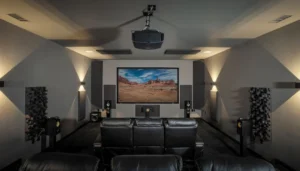
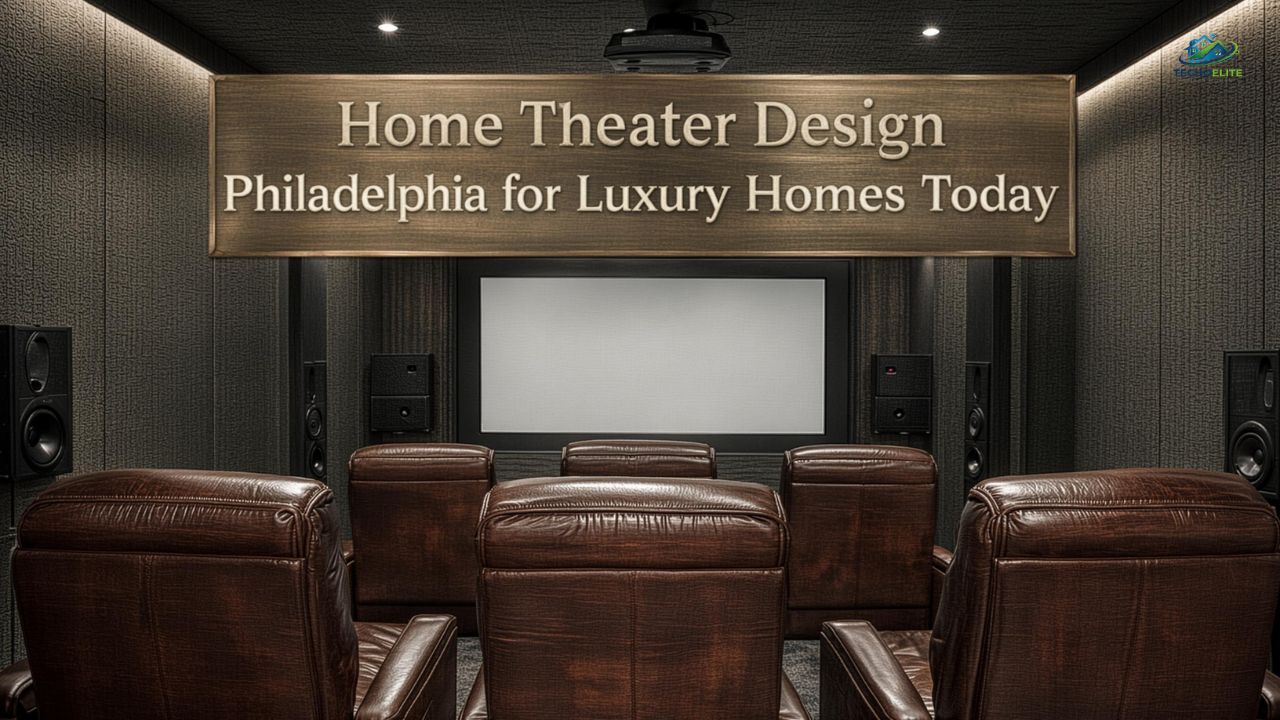
A home theater is a dedicated or semi-dedicated entertainment space designed to recreate a cinema-like experience at home. It may include a large TV or projector, surround sound, acoustic treatment, theater seating, smart lighting, and control systems.
Why Home Theater Design Philadelphia Requires Local Planning
Older Philadelphia homes often have narrow rooms, thick walls, basements, mixed ceiling heights, or limited wiring paths. These details can affect speaker placement, ventilation, screen size, and lighting.
Modern homes may offer more open space, but open layouts can create sound control challenges. That is why home theater design philadelphia should always begin with the room itself, not the equipment list.
Choosing the Right Room
The best room is not always the largest room. A good theater room should allow comfortable seating distance, controlled lighting, clean wiring, and balanced acoustics.
Basements are popular because they naturally reduce outside light and sound. Spare bedrooms, lofts, finished garages, and family rooms can also work well with the right design.
Good Room Features
- Limited natural light
- Enough wall space for a screen
- Space behind or beside seating for speakers
- Electrical access
- Comfortable ceiling height
- Room for ventilation
- Low outside noise
Screen Size and Viewing Distance
A screen should feel immersive without overwhelming the eyes. Bigger is not always better if the room is small.
For many homes, the right size depends on seating distance, resolution, screen type, and whether the room uses a TV or projector.
TV vs. Projector
A large TV is bright, sharp, and easy to maintain. It works well in mixed-use rooms.
A projector creates a more theater-like feel and can support a much larger image. It works best in rooms where light can be controlled.
Sound Design Matters More Than Most People Think
Sound is what makes a theater feel alive. Clear dialogue, deep bass, and surround effects can completely change the experience.
A proper audio layout places speakers where they support the seating area, not just where they fit on the wall.
Common Speaker Layouts
- 3.1 for simple front sound with bass
- 5.1 for classic surround sound
- 7.1 for larger rooms
- Dolby Atmos layouts for overhead sound effects
Seating Layout and Comfort
Seating affects everything: viewing angle, speaker position, walking space, and room flow.
For a dedicated theater, recliners or tiered seating can create a premium feel. For a family media room, a sectional may feel more natural.
Seating Tips
Leave enough space to walk behind and around seats. Avoid placing seats directly against the back wall because bass can become too heavy there.
Lighting Design for Movie Rooms
Lighting should support the mood without causing screen glare. Layered lighting works best.
Use dimmable ceiling lights, wall sconces, LED strips, step lights, or hidden cove lighting. Smart lighting scenes can set the room for movies, sports, gaming, or casual viewing.
Acoustic Treatment and Sound Control
Hard walls, glass, tile, and empty corners can make sound echo. Soft materials help absorb reflections and improve clarity.
Acoustic panels, carpet, curtains, upholstered seating, and bass traps can make the room sound smoother without making it look like a studio.
Smart Controls and Automation
A theater should be easy to use. One remote, wall keypad, tablet, or app can control the screen, audio, lighting, temperature, and streaming devices.
This is where home theater design philadelphia often overlaps with smart home planning. A connected system can make the room feel polished and simple.
Wiring and Equipment Placement
Clean wiring is one of the biggest differences between a basic setup and a professional-looking theater.
Cables should be hidden, labeled, and accessible for future updates. Equipment should have airflow and should not be trapped inside closed cabinets without ventilation.
Equipment to Plan For
- AV receiver or processor
- Amplifier
- Streaming device
- Gaming console
- Blu-ray player
- Network switch
- Power protection
- Control system hub
Designing for Philadelphia Rowhomes
Philadelphia rowhomes can be charming, but they often need careful space planning. Rooms may be narrow, walls may be shared, and basements may have lower ceilings.
In these homes, compact speakers, in-wall wiring, slim acoustic panels, and smart furniture choices can make a major difference.
Basement Home Theater Ideas
Basements are one of the best places for a theater because they are naturally darker and quieter.
A basement theater should include moisture checks, proper ventilation, safe electrical planning, comfortable flooring, and lighting that keeps the space from feeling closed in.
Luxury Media Rooms vs. Dedicated Theaters
Not every homeowner wants a fully dedicated cinema room. Some prefer a media room that works for movies, music, gaming, sports, and everyday family time.
A dedicated theater focuses on performance. A media room focuses on flexibility. Both can look beautiful when planned well.
Budget Planning for Home Theater Design Philadelphia
Costs can vary widely based on room size, equipment, wiring, seating, lighting, and finish level.
A simple media room may focus on a large TV, soundbar or surround system, and better lighting. A high-end theater may include a projector, acoustics, custom seating, hidden speakers, automation, and luxury finishes.
Where to Spend Wisely
Spend first on layout, sound, screen quality, wiring, and lighting control. Decorative upgrades can come later, but poor placement is harder to fix.
Mistakes to Avoid
Many home theaters disappoint because they are built around equipment instead of the room.
Avoid these common mistakes:
- Choosing a screen that is too large
- Ignoring speaker placement
- Forgetting acoustic treatment
- Using harsh lighting
- Hiding equipment without ventilation
- Placing seats too close
- Leaving wires exposed
- Skipping future upgrade planning
Home Theater Design Philadelphia for Families
A family theater should feel durable, comfortable, and easy for everyone to use.
Choose stain-resistant fabrics, safe cable paths, simple controls, and seating that works for kids and adults. Add storage for remotes, blankets, gaming controllers, and accessories.
Gaming, Sports, and Streaming Setup
A modern theater is not only for movies. Many homeowners also use it for gaming, live sports, YouTube, concerts, and streaming shows.
Gamers may need low input lag, strong Wi-Fi or wired internet, and comfortable lighting. Sports fans may want brighter screen performance and multiple viewing modes.
Interior Style and Room Atmosphere
A beautiful theater should match the home’s personality. Some rooms look best with dark walls and dramatic lighting. Others feel better with warm wood, soft neutrals, or modern minimal finishes.
The best designs hide technology without making the room feel cold.
Working With a Professional Designer or Installer
A professional can help plan layout, wiring, acoustics, equipment, and control before anything is installed.
For home theater design philadelphia, this is especially helpful when working with older homes, finished basements, shared walls, or complex smart home systems.
FAQ
What is the first step in designing a home theater?
Start with the room. Measure the space, check light levels, note ceiling height, and decide how many people need comfortable seating.
Is a projector better than a large TV?
A projector is better for a true cinema feel and very large screens. A TV is better for brighter rooms and simpler daily use.
Do I need acoustic panels?
Most rooms benefit from some acoustic treatment. Panels help reduce echo, improve dialogue, and make surround sound feel cleaner.
Can a small Philadelphia rowhome have a home theater?
Yes. A small room can work well with smart screen sizing, compact speakers, hidden wiring, and careful seating placement.
How many speakers should a home theater have?
A 5.1 system works well for many homes. Larger rooms may benefit from 7.1 or Dolby Atmos layouts.
Should I choose a dedicated theater or media room?
Choose a dedicated theater for the best movie experience. Choose a media room if the space also needs to support family time, gaming, music, or casual TV.
How important is lighting?
Lighting is very important. Poor lighting can create glare, eye strain, and a flat atmosphere. Dimmable layered lighting works best.
Can smart home controls be added later?
Yes, but it is easier and cleaner to plan smart controls during the design stage, especially for lighting, audio, video, and shades.
Conclusion
A great home theater is built through planning, not guesswork. The best rooms balance comfort, sound, picture, lighting, and style in a way that feels effortless.
With thoughtful home theater design philadelphia, homeowners can turn an unused basement, spare room, or family space into a cinematic retreat that feels personal, practical, and ready for years of movie nights.