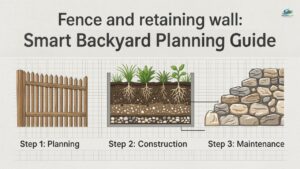
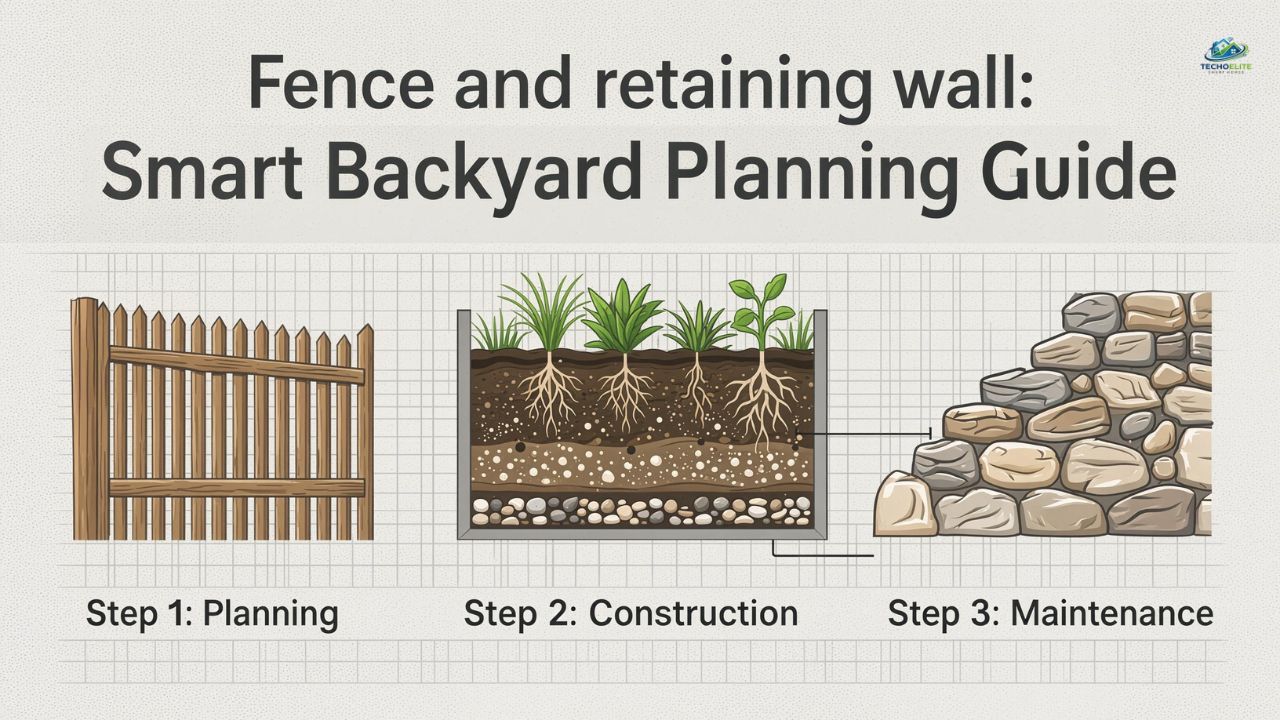
A sloped yard can feel like wasted space until the right design turns it into something beautiful, private, and genuinely useful. That is exactly why a fence and retaining wall project can be such a smart upgrade for homeowners dealing with uneven ground, exposed property lines, erosion, or awkward backyard levels.
The tricky part is that this is not just a “pick a pretty fence” decision. A retaining wall holds back soil, manages pressure, and often affects drainage, while a fence adds wind load, privacy, security, and visual height. Put them together without planning, and a simple weekend idea can become a cracked wall, leaning posts, water problems, or a permit headache.
The goal is to create an outdoor boundary that looks intentional and performs safely. That means thinking about soil, slope, water, materials, property lines, local codes, and how the finished yard will actually be used.
Before digging, homeowners should also contact 811 or their local state 811 center a few business days in advance so underground utilities can be marked; 811 specifically lists fence installation among common projects that require a locate request.
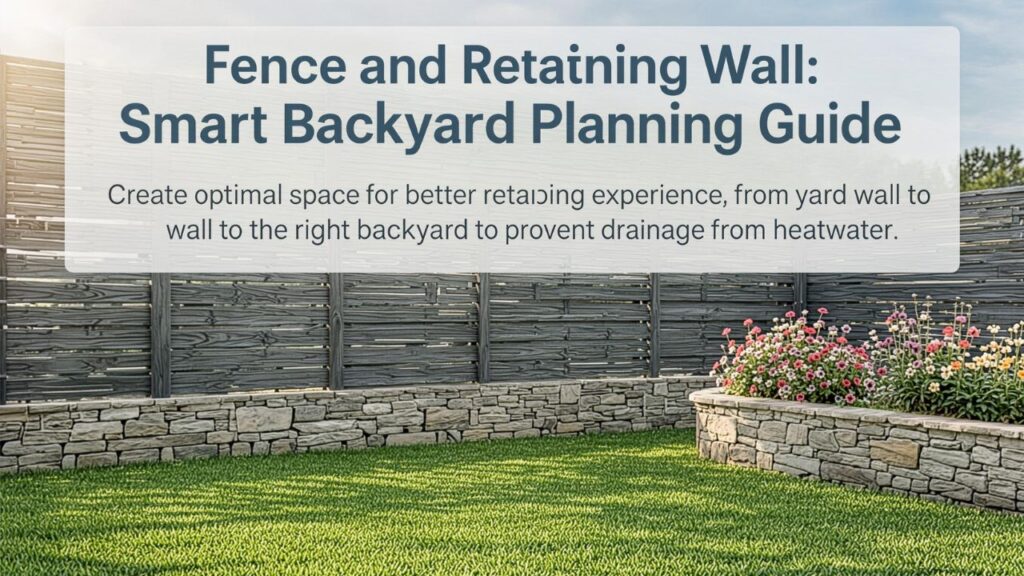
Table of Contents
- What a Combined Outdoor Wall Project Means
- Why Planning Matters Before You Build
- Main Design Options and Layout Ideas
- Permits, Codes, and Professional Engineering
- Drainage, Soil Pressure, and Structural Safety
- Best Materials for Walls and Fences
- How to Plan the Project Step by Step
- Budget, Value, and Financial Insights
- Common Mistakes to Avoid
- Real-Life Backyard Examples
- FAQ
- Conclusion
What a fence and retaining wall Project Really Means
A fence is a vertical barrier used for privacy, security, pet control, pool safety, decoration, or property separation. A retaining wall is a structure designed to hold back soil and create a stable change in grade. When these two features meet, they become more than separate yard upgrades.
In many homes, the wall handles the land, and the fence handles the people. The wall keeps soil where it belongs. The fence blocks views, defines the edge, protects a drop-off, or keeps kids and pets inside the yard.
That combination is common on sloped lots, terraced gardens, raised patios, walkout basements, side yards, corner lots, and backyards where neighbors sit at different elevations. It can be simple and low, or it can become a major structural project that needs drawings, drainage details, and an engineer.
The important definition is this: a combined wall-and-fence system must be designed as a connected outdoor feature, not as two unrelated pieces. A fence placed on top of or directly behind a retaining wall can add wind forces, post loads, and surcharge effects. That can change what the wall must resist.
Some local building departments make this point clearly. Walnut Creek, California, for example, says retaining walls require permits under several conditions, including walls over 4 feet, walls supporting surcharge loads, and walls supporting a substantially solid fence more than 3 feet high that adds wind or seismic loading.
In plain English, once a fence interacts with the wall, the wall may need to be stronger than a basic garden wall.
Why fence and retaining wall Planning Matters
Good planning protects three things: the structure, the property, and the people using the yard. It also saves money, because fixing a failing wall is almost always more expensive than building it correctly the first time.
Retaining walls fail for predictable reasons. Water builds up behind the wall. Soil pushes harder than expected. Footings are too small. Backfill is poorly compacted. Posts are drilled through a wall without reinforcement. The wall is too tall for its system. A fence catches wind and transfers extra load. Any one of these issues can slowly create bulging, cracking, leaning, or settlement.
That said, the design is not only technical. It is emotional too. A well-built boundary can make a backyard feel safer, calmer, and more private. A raised patio with a clean wall and warm wood fence can feel like a true outdoor room. A messy slope with a failing timber wall can feel stressful every time it rains.
A smart layout can also create more usable flat space. Instead of a yard that slides downward awkwardly, you might gain a lawn area, garden terrace, seating nook, play zone, or clean driveway edge.
Planning matters because the finished feature has to answer several questions at once:
- How much soil is being retained?
- Where will water go?
- How tall is the wall from footing to top?
- Will the fence sit on top of the wall, behind it, or separate from it?
- What wind exposure will the fence face?
- Is the project near a property line, sidewalk, driveway, easement, or neighbor’s structure?
- Will the area need a guardrail or safety barrier?
- Will local permits or engineered drawings be required?
Skipping these questions does not make the problems disappear. It only hides them until construction—or worse, until after the first storm.
Main Design Options and Layout Ideas
There are several ways to combine a wall and fence. The best choice depends on height, slope, style, budget, privacy needs, and code requirements.
Fence mounted behind the wall
This is often the simplest and safest-looking approach. The retaining wall is built first, and the fence posts are set into the soil behind it, far enough back that they do not overload or damage the wall.
This layout can look clean because the wall forms the lower edge while the fence rises behind it. It also allows the fence to be repaired or replaced later without disturbing the wall as much.
However, “behind the wall” does not automatically mean safe. If the fence is close enough to add load to the retained soil, the designer still needs to consider that effect.
Fence mounted on top of the retaining wall
This creates a crisp, space-saving boundary and is popular on narrow lots. It can look elegant when the posts align neatly with the wall below.
However, this is usually the more structurally sensitive option. Posts may need sleeves, embedded brackets, reinforced concrete, engineered block details, or special connections. A solid privacy fence on top of a wall can behave like a sail in the wind.
Carrollton, Texas, notes that when a fence is proposed on top of or through a retaining wall that requires a permit, a professional engineer must approve the wall design or modification.
Fence in front of the wall
Sometimes the fence is placed on the lower side of the wall, especially when privacy is needed from below or when the top side is too tight for posts.
This can work visually, but it may make wall maintenance harder. It can also create an odd shadow line or trapped planting strip if not designed carefully.
Terraced wall with fence above
For steep slopes, a single tall wall may feel heavy, expensive, or code-complicated. Terracing breaks the grade change into two or more shorter walls with planting beds between them.
A fence can then sit at the top terrace or behind the upper wall. This often looks softer and more garden-like. It may also reduce the visual impact of a large vertical structure, though terraced walls can still require engineering depending on height, spacing, and site conditions.
Fence as guard or railing
In some cases, the “fence” is really a guardrail or safety barrier at the top of a drop. That changes the purpose. It is no longer only about privacy; it must protect people from falling.
This is where local code becomes especially important. A decorative fence may not meet guard requirements for height, openings, strength, or climbability.

Permits, Codes, and Professional Engineering
Rules vary by location, so the safest advice is to check your city or county before building. Still, many jurisdictions use similar thresholds: retaining walls over about 4 feet, measured from the bottom of the footing to the top of the wall, often require permits or engineering, and walls supporting a surcharge may need review even when shorter.
The City of Tualatin, Oregon, says permits are required for fences over 7 feet and for retaining walls greater than 4 feet measured from the bottom of the footing to the top of the wall, or where the wall supports a nonsoil surcharge.
Portland, Oregon, explains that residential retaining wall permits generally require a site plan and engineering information, and that walls over 4 feet tall should include stamped drawings and calculations from an Oregon-registered engineer. Portland also lists slope drainage, erosion control, shallow failures, soil creep, settlement, surcharge loads, and protection of adjacent property among issues that may need evaluation.
This matters because height is not the only trigger. A short wall can still become complicated if it supports:
- A solid privacy fence
- A driveway or parking area
- A building foundation
- A steep backslope
- Another retaining wall
- Heavy soil or poor drainage
- Pool equipment or outdoor structures
- A public sidewalk, right-of-way, or neighboring property
Permits are not just paperwork. They force important questions to be answered before concrete is poured or blocks are stacked. In a best-case scenario, they protect the homeowner from hidden risk. In a worst-case scenario, they reveal that the project needs a professional before money is wasted.
HOA rules, easements, utility corridors, and property-line setbacks also matter. A wall built on the wrong side of a boundary can create neighbor conflict, legal stress, and expensive reconstruction.
Drainage, Soil Pressure, and Structural Safety
Drainage is the quiet hero of retaining wall design. A wall does not only resist dirt. It often has to resist water trapped in that dirt. Wet soil is heavier, and water pressure can push hard enough to crack or move a wall.
That is why many retaining wall systems include gravel backfill, perforated drain pipe, filter fabric, weep holes, proper grading, and safe discharge points. The drainage plan should move water away from the wall without dumping it onto a neighbor’s property or against a foundation.
A fence can complicate drainage if posts, concrete footings, or grade changes interrupt the path of water. For example, if fence posts are set directly behind the wall and the soil is poorly compacted around them, water may collect in pockets. If a solid fence blocks airflow and traps leaves against the wall, maintenance becomes harder.
A safe design usually considers:
- Soil type
- Wall height
- Footing depth
- Frost depth where relevant
- Drainage pipe location
- Backfill material
- Compaction
- Fence post spacing
- Wind exposure
- Load from nearby slopes or structures
- Water discharge direction
For small decorative garden walls, this may be straightforward. For taller walls, poor soils, steep lots, or fence-on-wall designs, an engineer or experienced retaining wall contractor is worth the cost.
One practical rule: if the wall protects something important, such as a patio, driveway, neighbor’s yard, foundation, or public walkway, treat it as a serious structure.
Best Materials for Walls and Fences
Material choice affects strength, style, lifespan, maintenance, and cost. The right pairing should match the house, climate, soil conditions, and privacy goals.
Segmental concrete block
Segmental retaining wall blocks are common because they are modular, attractive, and widely available. Many systems are designed with setbacks, pins, lips, geogrid reinforcement, and drainage details.
They pair well with wood, vinyl, aluminum, composite, or steel fencing. If fence posts are integrated with the wall, follow the wall manufacturer’s engineering details rather than improvising.
Poured concrete
Poured concrete is strong, clean, and suitable for engineered walls. It can be smooth, board-formed, stained, textured, or faced with stone.
It works well with modern horizontal fencing, metal railings, and minimalist landscapes. The downside is cost and the need for proper forms, reinforcement, drainage, and finishing.
Concrete masonry block
CMU walls can be reinforced with rebar and grout. They are practical and strong when engineered correctly, though plain block may need stucco, veneer, paint, or cap stones to look finished.
This option works well where durability matters more than softness.
Natural stone
Stone walls are beautiful, timeless, and full of character. Dry-stacked stone is often used for shorter landscape walls, while mortared or engineered stone systems may be needed for larger projects.
Stone pairs beautifully with cedar, iron, or simple rail fencing. It is often more labor-intensive, but the finished result can feel deeply connected to the landscape.
Timber
Wood retaining walls can be budget-friendly and warm-looking, but they have a shorter lifespan than concrete or stone in many climates. Moisture, insects, soil contact, and drainage details matter.
Timber can look natural with wood fencing, but it is not always the best choice for tall or long-term retaining needs.
Gabion walls
Gabion baskets filled with stone create a rugged, modern, drainage-friendly look. They are heavy and visually bold.
They pair well with metal fencing, horizontal wood, or contemporary landscapes. They need proper base preparation and structural planning, especially at height.
Fence materials
| Fence material | Best for | Watch out for |
|---|---|---|
| Wood | Warmth, privacy, custom style | Rot, staining, wind load |
| Vinyl | Low maintenance, clean appearance | Expansion, brittleness, style limits |
| Aluminum | Open views, safety rails, low maintenance | Less privacy |
| Steel or iron | Strength, traditional or modern look | Rust protection |
| Composite | Durable privacy and modern design | Higher material cost |
| Chain link | Budget, pets, utility areas | Less privacy unless screened |
| Horizontal slats | Modern curb appeal | Wind load and warping |
For the best visual result, repeat materials from the house. If your home has stone veneer, a stone-faced wall may feel natural. If your deck is cedar, a cedar fence may tie the yard together.
How to Plan a fence and retaining wall Step by Step
A successful project begins before anyone brings in blocks, posts, or concrete. Walk the site slowly and imagine water, soil, people, pets, wind, and future maintenance.
Step 1: Define the problem
Are you trying to stop erosion, gain flat space, add privacy, secure a pool, block a view, hold a driveway edge, or create a garden terrace? The answer determines the structure.
A privacy project may need a solid fence. A safety project may need a code-compliant guard. A slope project may need engineering. A decorative project may only need a short garden wall.
Step 2: Measure the grade change
Measure the vertical difference between the low side and high side. Do not guess from the exposed face only. Many permit thresholds measure from the bottom of footing to the top of wall, not just the visible wall height.
If the height varies, identify the tallest section.
Step 3: Check property lines and easements
Before building near a boundary, verify the property line. A survey may be necessary. Also check easements for utilities, drainage, access, and HOA restrictions.
A beautiful project in the wrong place can become a miserable dispute.
Step 4: Contact 811
Any digging for fence posts, wall footings, drain lines, or grading should begin with utility marking. 811 says homeowners should contact the service before digging and wait for utility responses before breaking ground.
Step 5: Check local permits
Call or visit your local building department. Ask specifically about retaining wall height, surcharge, fence height, setbacks, corner visibility rules, pool barriers, drainage discharge, and whether engineered drawings are needed.
Step 6: Choose the layout
Decide whether the fence sits behind the wall, on top of it, in front of it, or on a separate terrace. This choice affects structure, cost, appearance, and maintenance.
Step 7: Plan drainage
Drainage should be designed before construction, not improvised after the wall is finished. Include gravel, pipe, weep paths, grading, and discharge routes.
Step 8: Choose materials
Balance strength, maintenance, style, and cost. A rustic timber wall may be charming, but not ideal for every slope. A concrete wall may be strong, but it needs softening with plants, caps, texture, or fence design.
Step 9: Build with inspection points
For engineered or permitted projects, inspection may be required at footing, reinforcement, drainage, backfill, or final stages. Even for DIY work, take photos before backfill so you have a record of drainage and construction details.
Step 10: Landscape the transition
Plants soften the structure. Use groundcovers, grasses, shrubs, vines, or raised beds to make the wall feel like part of the yard instead of a hard boundary dropped into place.
Budget, Value, and Financial Insights
There is no personal background or net worth angle for this topic because it is a construction and landscaping subject, not a public person or celebrity. The useful financial discussion is project value: what costs more, what saves money, and where homeowners should not cut corners.
A wall-and-fence project can range from modest to expensive depending on height, access, engineering, soil conditions, drainage, materials, labor, demolition, hauling, permits, and landscaping.
The biggest cost drivers are usually:
- Wall height and length
- Engineering requirements
- Soil conditions
- Access for equipment
- Drainage complexity
- Material choice
- Fence height and style
- Removal of old structures
- Property-line or permit complications
- Need for railings or guards
A small decorative wall with a light fence nearby is very different from a structural retaining wall supporting a raised yard and solid privacy fence.
Here is a practical budgeting table:
| Project level | Typical scope | Cost behavior |
|---|---|---|
| Basic garden edge | Low wall, simple fence nearby | Lower cost, mostly aesthetic |
| Moderate privacy upgrade | Short retaining wall, wood or vinyl fence | Mid-range, depends on drainage |
| Sloped yard terrace | Multiple walls, landscaping, fence above | Higher due to grading and labor |
| Engineered structural wall | Taller wall, surcharge, stamped plans | Higher due to design and inspection |
| Premium outdoor boundary | Stone, concrete, custom metal or composite fence | Highest finish and labor cost |
Do not save money by skipping drainage, utility marking, or structural advice. Those are the boring parts that protect the beautiful parts.
From a home-value perspective, the strongest return is often usability. A yard that was once steep, exposed, or eroding becomes functional. Buyers may not calculate the exact value of the wall, but they notice a backyard that feels safe, finished, and low-stress.
Common Mistakes to Avoid
The first mistake is treating the fence as weightless. A light-looking fence can still catch wind, transfer force, and affect the wall below. Solid privacy panels are especially important to plan properly.
The second mistake is building without drainage. Water behind a retaining wall is one of the classic causes of trouble. Drainage stone and pipe may not be visible after construction, but they matter every time it rains.
The third mistake is setting posts into the wall without an approved detail. Drilling into block, concrete, or caps may weaken the system or create cracks if the wall was not designed for it.
The fourth mistake is measuring only the visible wall. Many permit rules use total wall height from the bottom of the footing to the top of the wall. That hidden footing depth can matter.
The fifth mistake is ignoring neighbors. Drainage, height, views, shadow, and property lines can all create tension. A short conversation before construction may prevent months of frustration.
The sixth mistake is choosing materials that do not match the environment. Untreated wood in wet soil, poor-quality fasteners near irrigation, or slippery caps on a path can create avoidable problems.
The seventh mistake is forgetting maintenance access. If plants, fences, or patios block the wall, repairs become harder later.
The eighth mistake is building too close to utilities. Fence posts and wall footings can hit gas, electric, water, sewer, communications, or irrigation lines. This is exactly why the 811 process exists.
The ninth mistake is assuming a short wall is always simple. A short wall supporting a driveway, building load, steep slope, or solid fence may be more serious than a taller freestanding garden wall.
The tenth mistake is chasing the cheapest bid without understanding what is included. If one contractor includes excavation, base prep, drainage, geogrid, permits, and cleanup, and another does not, the lower number may not be cheaper in reality.
Real-Life Backyard Examples
Imagine a suburban backyard where the neighbor’s yard sits three feet higher. The existing timber wall is rotting, and the chain-link fence above it leans badly. A strong solution might include removing the old wall, rebuilding with segmental blocks, adding proper gravel and drain pipe, and setting a cedar privacy fence behind the wall rather than directly through it. The finished yard feels cleaner, safer, and more private.
Now picture a narrow side yard on a sloped lot. There is not much room for separate structures. A concrete retaining wall with engineered post sleeves may allow a slim metal fence or guard to sit neatly on top. This saves space but requires careful design.
Another example: a front yard corner lot where a homeowner wants privacy from passing cars. A tall solid fence near the street may violate visibility rules, so the better approach might be a low retaining wall, layered planting, and a shorter open-style fence that preserves sightlines.
For a modern backyard, poured concrete with horizontal wood slats can look sleek and warm. For a cottage garden, natural stone with a picket or simple rail fence may feel more charming. For a rural property, boulder walls and split-rail fencing may blend better with the land.
The lesson is simple. The best design does not just copy a photo. It responds to slope, soil, code, architecture, budget, drainage, and the way the family actually uses the yard.
FAQ
Can you put a fence on top of a retaining wall?
Yes, but it should be planned carefully. A fence on top of a retaining wall can add wind load and structural stress, especially if it is a solid privacy fence. Many locations require engineering or permit review for this type of installation.
Is it better to put the fence behind the wall?
Often, yes. Placing the fence behind the wall can make construction and future repairs easier. However, if the fence is close to the wall, it may still affect the soil load, so spacing and design matter.
Do I need a permit for a fence and retaining wall?
It depends on your local rules, height, location, surcharge loads, and fence type. Many cities require permits for retaining walls over 4 feet or for walls supporting surcharge loads. Some also regulate fence height, front-yard placement, pool barriers, and visibility zones.
What is surcharge on a retaining wall?
A surcharge is an added load above or behind the wall, such as a fence, driveway, slope, building, parked vehicle, patio, or another wall. Surcharge can increase the pressure the retaining wall must resist.
What is the best material for a combined wall and fence?
There is no single best material. Segmental block, poured concrete, CMU, stone, timber, and gabions can all work depending on the site. For fences, wood, vinyl, aluminum, steel, composite, and chain link each have different strengths.
How far should fence posts be from a retaining wall?
The right distance depends on wall height, soil, fence height, footing depth, and structural design. For anything beyond a small decorative project, ask a qualified contractor or engineer instead of guessing.
Why is drainage so important behind a retaining wall?
Water adds pressure and weight behind the wall. Proper drainage helps move water away so the wall is not forced to resist unnecessary hydrostatic pressure.
Can I build this as a DIY project?
Small decorative walls and simple fences may be DIY-friendly for skilled homeowners. Taller walls, steep slopes, solid fences on top of walls, poor soils, and walls near structures should involve professionals.
What should I do before digging?
Mark the layout, verify property lines, check permits, and contact 811 or your local utility notification center before digging. Wait until utilities have responded and markings are complete.
Conclusion
A good outdoor boundary should feel calm, sturdy, and natural—not like a risky stack of materials holding its breath. When a wall and fence are planned together, they can turn a difficult slope into a beautiful, useful part of the property.
The smartest fence and retaining wall projects respect both design and structure. They handle water properly, follow local rules, account for wind and soil pressure, and use materials that fit the home.
Start with the land, not the catalog. Measure the grade, check the rules, plan drainage, call 811, and ask for engineering help when the wall supports more than simple garden soil. Do that, and the finished yard will not just look better—it will feel safer, more private, and much easier to enjoy.