There’s a moment every parent recognizes — you walk into a room that was supposed to be a spare bedroom, look at the pile of LEGOs on the floor and the art supplies colonizing the dining table, and you think: we need a dedicated space for this.
That’s where the right playroom ideas come in.
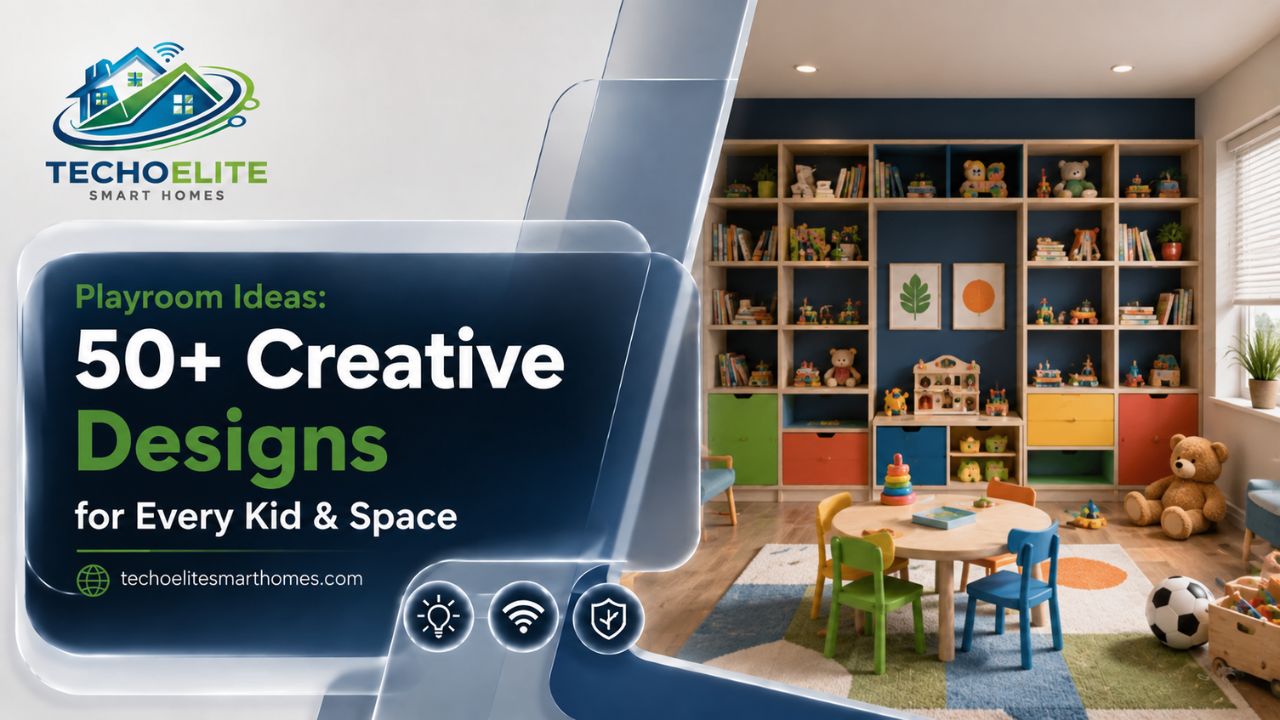
A well-designed playroom isn’t just a place to dump toys. It’s a room that grows with your child, keeps mess contained, sparks creativity, and — if you do it right — gets used for years without looking tired. Whether you’re starting from scratch with a blank room or reorganizing an existing chaos zone, this guide covers everything: kids playroom ideas that actually work, smart storage, age-specific design strategies, inspiration for tight spaces, and decor approaches that feel intentional rather than cluttered.
Let’s get into it.

Why a Dedicated Playroom Changes Everything
Before getting into the specifics of playroom design, it’s worth understanding why dedicated play spaces matter beyond simple organization.
Research in child development consistently links purposeful play environments to improved concentration, creativity, and independent play. When children have a space that belongs to them — one with clear zones, easy access to materials, and physical room to move — they engage in longer, more focused play sessions. They’re also more likely to clean up after themselves when storage is intuitive.
For parents, a great play room means the rest of the house stays livable. No more stepping on LEGO at midnight. No more explaining why the train set is living on the kitchen counter.
The goal isn’t Pinterest perfection. It’s a functional, fun kids play room that your actual children will use every single day.
Start Here: Know Your Child’s Age and Stage
The single biggest mistake people make when planning a playroom for kids is designing it for one age and forgetting that kids change fast.
A room built for a three-year-old needs a full rethink by age seven. And older child playroom ideas look completely different from toddler setups — more desk space, less foam flooring, different storage altogether.
Playroom Ideas for Toddlers (Ages 1–4)
Playroom ideas for toddlers prioritize safety, simplicity, and sensory engagement. At this stage, children learn through touch, movement, and repetition. The environment should support all three.
Key design principles for toddler play rooms:
- Low, open shelving. Toddlers need to see their options clearly. Clear bins at eye level beat tall cupboards every time. IKEA KALLAX units are a popular choice — and for good reason. They’re low, modular, and the bins are swappable as needs change.
- Soft flooring. Foam play mats, interlocking tiles, or a thick area rug protect little ones who fall — and they will fall. Look for non-toxic, easy-wipe options.
- Clear floor space. Toddlers need room to move. Resist the urge to fill every corner. A big open area in the center of the room is where most play happens.
- Rotate toys. Having everything accessible at once overwhelms toddlers and leads to scatter rather than play. Keep half the toys stored and rotate weekly.
- Art station at their height. A small easel or low table dedicated to art keeps creative mess contained to one zone.
Playroom inspiration for toddlers often leans into soft neutrals with pops of primary color — not because it looks good on Instagram, but because high-contrast, simple color environments are genuinely stimulating for developing visual systems.
Kids Playroom Ideas for School-Age Children (Ages 5–10)
Once kids hit school age, their play becomes more complex. They want to build elaborate LEGO structures that take days. They have art projects, board games, costumes, and sports equipment. A kids playroom for this age group needs to handle a lot more variety.
What changes:
- Storage needs to get more specific. Instead of bins labeled “toys,” you want zones: building, art, games, reading, dress-up.
- A desk or table for focused work becomes useful — not just for homework, but for crafts, drawing, and making things.
- A reading nook pays dividends. A beanbag or small tent in a corner with a bookshelf nearby becomes a retreat kids actually use.
- Height matters more. Shelving can go higher. Pegboards on walls become practical. Wall-mounted storage frees up floor space.
Kids playroom ideas for this age should also build in flexibility. Things like freestanding units, pegboards, and modular shelving can be rearranged as interests change. A room that worked for a LEGO phase can shift to support a crafting phase without a full renovation.
Older Child Playroom Ideas (Ages 10–14+)
Older child playroom ideas require a different approach entirely. By this point, “playroom” starts to mean something closer to a hobby room, creative studio, or hangout space. The toys are largely gone, replaced by gaming equipment, instruments, art supplies, or sport gear.
What works for older kids:
- A proper desk setup — especially if gaming or digital art is a hobby. Cable management matters here. So does lighting.
- Comfortable seating beyond just a desk chair. Floor cushions, a sofa, or a couple of bean bags signal that this is their space to relax.
- Display space. Older kids want to show off what they make — artwork, collections, trophies. Open shelving or a gallery wall gives them ownership.
- Acoustic consideration. If music or gaming is involved, some basic acoustic panels or a thick rug can keep noise from traveling through the house.
The shift at this age is from “playroom for kids” to something that respects their growing need for autonomy. The best older child playroom ideas involve the child in the design conversation — what do they actually want in there?
Boys Playroom Ideas: Themes and Layouts That Work
Boys playroom ideas run the full spectrum from highly themed rooms to simple, flexible setups. The key is not to lock in a theme so specific that it feels wrong six months later.
That said, some themes have real staying power:
Adventure / Explorer Theme Maps on the walls, a rope ladder, natural wood tones, and earthy greens create a space that feels like a treehouse. This kind of playroom decor holds up well because it’s based on aesthetics rather than a specific character or franchise.
Sports and Active Play A climbing wall panel, a basketball hoop mounted to the door, a balance beam, and open floor space for movement. This kind of setup turns the play room into a mini gymnasium. Great for high-energy kids.
LEGO / Builder Room Dedicated LEGO tables with built-in storage, display shelves for finished builds, and good task lighting. LEGO is one of the few toys that genuinely spans ages 4 to adult — designing around it is never a bad investment.
Space Theme Dark walls, glow-in-the-dark stars, silver and navy as the palette, and storage that looks like mission control panels. This works particularly well in rooms with low natural light, where dark walls would otherwise feel oppressive.
Whatever theme you choose for a boys playroom, keep the bones neutral — flooring, main furniture, storage units — and let the themed elements come through in wall art, bedding (if this doubles as a bedroom), accent colors, and accessories. That way, a theme refresh doesn’t require a full room remodel.
Small Playroom Ideas: Making the Most of Tight Spaces
Not everyone has a spare room to dedicate to play. Small playroom ideas are about working with what you have — whether that’s a corner of a bedroom, a large closet converted to a play nook, or a narrow room that needs to do double duty.
Vertical Is Your Best Friend
When floor space is limited, go up. Wall-mounted shelving, pegboards, and even hanging organizers free up the floor for actual play. A well-organized playroom can function in less than 80 square feet when vertical space is used properly.
Convertible Furniture
Fold-down desks, Murphy beds with built-in storage, and nesting tables that stack when not in use all help small play rooms function at full capacity without permanent bulk.
The Closet Playroom
One of the most effective indoor playroom ideas for small homes is converting an unused closet. Remove the doors, add a small desk and pegboard inside, and suddenly you have a defined play zone that can literally close off when needed. Kids love having a “secret” space, and parents love being able to tuck the mess out of sight.
Dual-Purpose Spaces
A small playroom that doubles as a guest room or study needs furniture that works for both functions. A daybed, a fold-away desk, and bins that slide under furniture can make a room feel spacious when guests arrive and fully functional as a play room for kids the rest of the time.
Color and Light
In small spaces, color strategy matters more. Light walls, good mirrors, and smart lighting make a room feel larger. A playroom with a bright white or soft warm wall color reads as bigger than it is. Dark accent walls can work but should be limited to one wall to avoid closing the room in.
Indoor Playroom Ideas: Bringing the Outside In
Indoor playroom ideas that incorporate active, physical play are some of the best investments you can make — especially in climates where outdoor time is limited.
Indoor climbing structures have become significantly more compact and well-designed over the past decade. Brands like Pikler & Folk, Little Climber, and Kletterdreieck offer wooden triangle climbing frames that fold flat, look attractive, and give kids a physical challenge without dominating the room.
Sensory walls are another strong indoor playroom feature for younger children — panels with different textures, moveable elements, and tactile materials keep hands busy and minds engaged.
A light table placed low to the floor opens up an entire world of exploratory play — with translucent blocks, colored water beads, loose parts, and tracing. It looks beautiful and gets used constantly.
Art walls — a section of wall covered in chalkboard paint or a large magnetic whiteboard — let kids create at scale without the constraint of paper. These are particularly effective playroom wall ideas that double as functional display space.
Playroom Design: Zones That Actually Work
The most effective playroom design isn’t about themes — it’s about zones. Breaking a room into clear activity areas helps kids understand where things go and helps them transition between types of play more smoothly.
The Five Core Zones
1. Active Play Zone Open floor space, possibly a soft mat, a climbing structure or balance equipment. This is where kids move. Keep this area near the center or a clear wall.
2. Building and Construction Zone A low table, flat storage for LEGO and blocks, and good lighting. LEGO tables with sorting drawers are a perennial favorite for good reason — they keep pieces sorted and give kids a dedicated workspace.
3. Creative and Art Zone An easel or table, washable surfaces, organized art supplies in labeled bins, and a display wall for finished work. Easy access to paper, crayons, and paint encourages spontaneous creativity.
4. Reading and Quiet Zone A beanbag, cushion, or small sofa, a bookshelf at child height, and softer lighting. This zone is crucial even for kids who aren’t yet confident readers — it builds the habit of seeking out books.
5. Imaginative Play Zone Dress-up storage (hooks at child height work well), a play kitchen, dollhouse, or small-world setup. This zone supports the kind of open-ended, narrative play that’s so valuable for social and emotional development.
Not every kids playroom needs all five zones — but identifying which two or three are most relevant to your child’s current interests helps make playroom design decisions much easier.
Playroom Decor Ideas: Style Without Sacrificing Function
Playroom decor ideas have changed significantly over the past decade. The shift has been away from hyper-colorful, character-driven aesthetics toward something more considered — rooms that feel intentional, age with the child, and look attractive without trying too hard.
Color Palettes That Work
Forget primary colors plastered everywhere. The most effective playroom decor uses a restrained palette with one or two anchor colors, then lets toys and accessories add the rest.
Popular combinations:
- Soft white walls + natural wood + sage green accents — clean, calming, versatile
- Warm white walls + terracotta + dusty blue — earthy and warm, holds up well over time
- Light grey walls + yellow + navy — classic, bold without being overwhelming
Playroom Wall Ideas
Playroom wall ideas are where personality really comes through. Some strong options:
- Gallery wall of kid’s own artwork — framed prints of their drawings look incredible and change the room completely as new art gets created
- Chalkboard paint on one wall — functional and endlessly reusable
- Peel-and-stick murals — not permanent, easy to change, and available in genuinely beautiful designs these days
- Floating shelves for display — doubles as storage and decor
- Washi tape geometric patterns — easy to change, surprisingly effective as an accent
Lighting
Lighting is one of the most underrated elements of playroom design. Natural light is always preferable. Where it’s limited, a combination of ambient (overhead), task (desk or art area), and accent (nightlight or fairy lights in a reading nook) creates a space that functions well at all times of day.
Avoid harsh overhead fluorescent lighting. A warm white LED at around 2700–3000K makes a room feel inviting rather than institutional.
Storage as Decor
Well-chosen storage is one of the most effective playroom decor ideas. Wicker baskets, wooden bins, and canvas-covered boxes all look attractive while keeping clutter contained. Labeling — with pictures for pre-readers, words for older kids — turns storage into a system rather than a dumping ground.
Playroom Inspiration: Real Design Examples
Playroom inspiration doesn’t have to come from expensive professional designs. Some of the most effective kids playroom setups are built on a tight budget with clever thinking.
The “IKEA Hack” Playroom
IKEA KALLAX units are the backbone of countless kids playroom ideas. Paired with Drona or Kuggis storage boxes, they create a customizable shelving system that can evolve over years. Stack two together, add legs from the IKEA KALLAX leg set, and you have a table height unit. Add a wooden top and you have a work surface. This approach keeps costs low while creating a genuinely attractive and functional space.
The Converted Garage Playroom
For families with an attached garage and willing to sacrifice parking space, a garage conversion creates a kids playroom of impressive scale. Insulation, a painted concrete floor, and some quality storage transforms a raw space into a real indoor playroom — with room for active play, craft zones, and still space to park bikes.
The Rental-Friendly Playroom
For families who rent or don’t want to make permanent changes, playroom design still has options. Peel-and-stick wallpaper, freestanding shelving, floor-standing artwork display systems, and removable wall hooks create a fully functional, attractive play room for kids without a single nail hole.
Playroom Furniture: What to Buy, What to Skip
A few things are worth investing in. Many things aren’t.
Worth the investment:
- A good-quality art table with storage (look for ones with raised edges to contain craft mess)
- Solid wood shelving that can be repurposed as the room evolves
- A quality foam or area rug — the floor is where kids live, so this matters
- Adjustable-height desk if the room will serve older kids
Can be budget:
- Storage bins and baskets — function over brand
- Hooks and pegboards — these are inexpensive and highly effective
- Bean bags and floor cushions
- Most decorative items
Usually not worth it:
- Very expensive character-licensed furniture that dates quickly
- Elaborate themed beds (unless this is also a bedroom)
- Complicated storage systems that require adult assembly every time a child gets something out
Common Playroom Mistakes (And How to Avoid Them)
Even with the best intentions, playroom ideas go wrong. Here are the most common mistakes and how to sidestep them.
Too much stuff, not enough space. More toys does not mean more play. Research consistently shows children play more creatively with fewer, higher-quality options. Rotate toys and store half at any given time.
Storage that’s too difficult for kids to use. If a child can’t independently get something out and put it back, the storage system is working against you. Bins without lids, open shelving, and hooks at child height are the benchmark.
Ignoring acoustics. Hard floors, bare walls, and no soft furnishings create an echoey, stimulating room. A rug, some wall art, and soft seating dampen sound and make the room more pleasant for everyone.
Designing for Instagram rather than actual use. The most photogenic playroom decor ideas are often the least functional. A room that photographs beautifully but doesn’t hold up to daily use is a frustrating experience.
Forgetting to plan for growth. The best playroom design builds in flexibility from the start. Modular furniture, neutral base colors, and adaptable storage mean the room can evolve without a full redesign.
Quick Comparison: Playroom by Age
| Feature | Toddlers (1–4) | School Age (5–10) | Older Kids (10+) |
|---|---|---|---|
| Flooring | Foam mats, soft rugs | Area rug, hardwood | Hardwood, carpet |
| Storage | Low open bins | Labeled bins + pegboard | Drawers, shelves |
| Furniture | Low tables + floor cushions | Desk + bean bags | Full desk setup, seating |
| Key Zone | Active play, sensory | Building, art, reading | Hobby/gaming, display |
| Wall Ideas | Soft murals, gallery wall | Chalkboard, display shelves | Gallery, pegboard |
| Design Feel | Warm, soft, open | Organized, colorful | Personal, intentional |
FAQ: Playroom Ideas
What are the best playroom ideas for small spaces? The key is vertical storage, dual-purpose furniture, and clear zones. Mounted shelving, fold-down desks, and over-door organizers free up floor space. A well-organized small playroom can be more functional than a large, cluttered one.
How do I design a playroom for multiple age groups? Zone the room by activity type rather than age. An art zone works for both toddlers and ten-year-olds with slightly different supplies. A reading corner suits all ages. Keep active play zones open and adaptable.
What’s the best flooring for a kids playroom? Foam interlocking mats for toddlers, area rugs over hardwood for school-age, and hardwood or carpet for older kids. Avoid polished hardwood without a rug — it’s slippery and loud.
How do I keep a playroom organized? Systems beat intentions. Label everything, use bins without lids, and schedule a weekly toy rotation. Involve children in putting things away from the earliest age possible — it builds habit.
How much does it cost to set up a kids playroom? Costs vary enormously. A basic kids playroom setup using IKEA furniture, budget bins, and peel-and-stick wall decor can come in under $500. A fully designed custom room with built-in shelving and quality furniture can cost $5,000+. Most families land somewhere in between.
What are good indoor playroom ideas for active kids? Climbing structures, balance boards, a small trampoline (with safety rail), a basketball hoop, and open floor space all support active indoor play. Even a large open floor area with just a foam mat is enough for active toddlers.
What colors work best for a playroom? Warm neutrals with one or two accent colors tend to age the best. Avoid painting everything in primary colors — it becomes visually overwhelming. Let toys bring the color; keep walls and larger furniture more restrained.
What are good playroom wall ideas? Chalkboard paint, gallery walls of children’s artwork, floating shelves for display, peel-and-stick murals, and pegboards all work well. The best playroom wall ideas combine aesthetics with function.