

You can usually tell within ten seconds whether a home feels truly welcoming. It’s not always the square footage, the price tag, or even the furniture. Often, it’s the balance of warmth, texture, light, and comfort — exactly why modern farmhouse interior design continues to feel so personal and livable.
This look matters because most people don’t want a home that feels staged. They want rooms that can handle muddy shoes, family dinners, quiet mornings, pets on the sofa, and guests who naturally gather in the kitchen. Done well, farmhouse decor gives you that relaxed feeling without making the home look dated or overly themed.
The real beauty of this style is its flexibility. You can bring it into a suburban new build, a city townhouse, a country property, or a renovated ranch home without forcing every room to look like a barn. The goal is comfort with polish, not clutter with clichés.
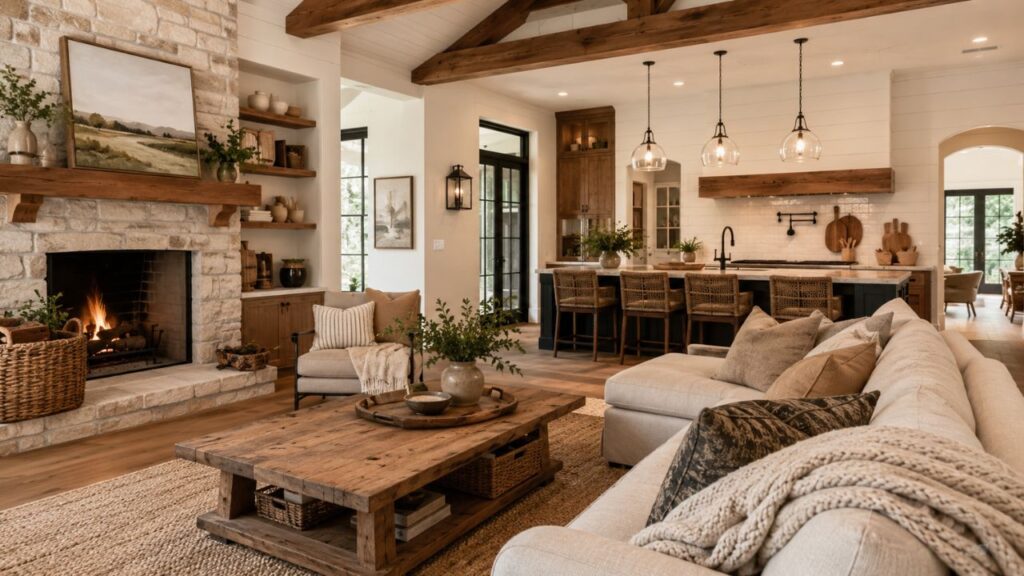
Why Modern Farmhouse Interior Style Still Feels Fresh
Modern farmhouse interior style has lasted because it solves a common design problem: how to make a home feel both clean and cozy. Minimalist rooms can sometimes feel cold, while traditional farmhouse rooms can feel heavy or overly rustic. This style sits in the middle, using simple lines, natural materials, and practical comfort.
Houzz’s 2025 home design trend reporting points to warm woods, creamy off-whites, natural upholstery, stone, and organic modern influences as major directions for homeowners, which fits naturally with today’s softer farmhouse look. The best modern farmhouse interior doesn’t copy a catalog image; it creates a calm backdrop where real life can happen.
The Difference Between Rustic and Modern Farmhouse
Rustic farmhouse leans heavier on rough wood, distressed finishes, antique pieces, and country details. Modern farmhouse style keeps some of that warmth but edits it with cleaner silhouettes, smoother finishes, and better balance.
Think of it this way: rustic farmhouse may use a chunky reclaimed wood table with heavy iron chairs, while a modern version might pair that same table with upholstered dining chairs, simple pendant lights, and a soft neutral color palette. The room still feels grounded, but it breathes.
Why the Look Works in Real Homes
A modern farmhouse room doesn’t demand perfection. Natural knots in wood, hand-thrown pottery, woven baskets, linen wrinkles, and aged brass all add character. That makes the style forgiving, especially for families and busy homeowners.
It also works because the big design moves are easy to understand: warm wood, soft whites, strong contrast, layered texture, and useful furniture. You don’t need a huge budget to apply those ideas; you need restraint, proportion, and a clear plan.
Modern Farmhouse Interior Color Palettes That Feel Warm, Not Flat
Color is where many homes either succeed or miss the mark. A modern farmhouse interior usually starts with warm neutrals, but “neutral” doesn’t mean plain white everywhere. The most inviting rooms use layered tones like cream, oatmeal, greige, mushroom, clay, taupe, warm gray, charcoal, and soft brown.
Houzz’s 2026 trend coverage also notes a growing preference for earthy yellows, ocher, honey, rust, burgundy, deep brown, and warm medium wood tones, which shows how homeowners are moving toward richer, more grounded interiors. For a modern farmhouse interior, that means you can move beyond the old white-and-gray formula and still keep the home timeless.
Start With a Base Color
Your base color covers the largest surfaces: walls, big sofas, cabinetry, or built-ins. Warm white is still a safe choice, but the undertone matters. A cold blue-white can make farmhouse decor feel sterile, while a creamy white softens the room.
Good base colors often look slightly muted in the can but beautiful on the wall. Try warm white, soft beige, limestone, pale mushroom, or a barely-there greige. Always test paint in morning light, afternoon light, and artificial light before committing.
Add Contrast With Intention
Black metal accents are popular for a reason. They sharpen soft rooms and keep the design from feeling washed out. You might use black in window frames, cabinet pulls, picture frames, pendant lights, or stair railings.
The trick is not to overdo it. If every fixture, chair leg, mirror, faucet, and shelf bracket is black, the room can feel busy. Use contrast like punctuation: enough to define the space, not so much that it shouts.
Use Muted Colors Instead of Bright Ones
If you want color, choose shades that look like they came from nature. Sage, olive, dusty blue, muted terracotta, warm clay, and deep forest green all work beautifully. These colors pair well with wood, stone, linen, cotton, and leather.
A sage mudroom, clay-toned powder room, or deep green kitchen island can give a rustic modern home more personality without making it feel trendy. Color should feel settled, not loud.
Modern Farmhouse Interior Materials: Wood, Stone, Metal, and Texture
The heart of a modern farmhouse interior is material honesty. Wood should look like wood. Stone should have natural variation. Fabrics should invite touch. The room feels richer when materials have depth instead of looking overly polished.
White oak floors, reclaimed wood beams, limewashed brick, soapstone counters, woven shades, jute rugs, linen drapes, and leather stools all bring texture. You don’t need all of them in one room. In fact, the best rooms usually repeat three or four materials thoughtfully.
Wood Sets the Tone
Wood is the quickest way to add warmth. White oak floors feel clean and current, while walnut brings depth and sophistication. Reclaimed wood works best as an accent, such as floating shelves, a mantel, ceiling beams, or a dining table.
Avoid using too many wood tones with the same intensity. A room with orange floors, dark beams, pale furniture, and gray-washed shelves can feel confused. Choose one dominant wood tone, one supporting tone, and let the rest of the room stay quiet.
Stone Adds Weight and Permanence
Natural stone makes a home feel established. In a kitchen, honed marble, quartzite, soapstone, or a stone-look porcelain can add depth. Around a fireplace, limestone or textured stone can create a beautiful focal point.
The National Kitchen & Bath Association’s 2026 Kitchen Trends Report notes that natural materials are leading kitchen design, with wood grain growing in popularity and white oak ranking as the most popular wood type among respondents. That lines up closely with the direction of farmhouse kitchens: warmer, more tactile, and less dependent on flat white finishes.
Texture Keeps Neutrals Interesting
A neutral color palette only works when the textures do the heavy lifting. Mix smooth, rough, soft, matte, and woven surfaces. A slipcovered sofa, nubby throw, antique wood bench, ceramic lamp, and wool rug can all live in the same room because each texture adds something different.
Shiplap walls can still work, but use them with care. A single shiplap fireplace wall or mudroom wall feels more current than wrapping every room in boards. When everything becomes a feature, nothing feels special.
Designing a Modern Farmhouse Kitchen That Actually Works
In many homes, the kitchen carries the entire style. In a modern farmhouse interior kitchen, beauty has to meet daily function: school lunches, coffee routines, weeknight dinners, holiday cooking, and everyone standing around the island even when there are chairs somewhere else.
Start with the layout before choosing finishes. A good open concept kitchen needs clear zones for cooking, prep, cleanup, storage, and seating. If the island is too large, walkways feel tight. If it’s too small, it won’t support how people actually gather.
Cabinetry That Feels Current
Shaker cabinets remain popular, but the freshest versions are slimmer and cleaner than the bulky profiles from years ago. Flat-panel drawers mixed with simple shaker doors can create a balanced look. White cabinets still work, but warm wood, mushroom, sage, taupe, and deep green often feel more personal.
For farmhouse kitchen cabinets, consider using painted perimeter cabinets with a wood island, or wood lower cabinets with light upper shelving. This approach adds depth without making the kitchen feel heavy.
Counters, Backsplashes, and Sinks
A farmhouse sink can be beautiful, but it should fit the room rather than become a costume piece. Fireclay, cast iron, and stainless apron-front sinks all have different personalities. In most cases, a simpler sink works better if the kitchen already has strong beams, bold lighting, or a dramatic stone counter.
For backsplashes, handmade-look tile, zellige-style tile, marble slab, brick veneer, or simple square tile can all work. Keep grout color soft unless you intentionally want contrast. A loud pattern can age quickly, while a textured simple tile keeps the room calm.
Lighting That Changes the Mood
Farmhouse lighting should feel warm, not harsh. Oversized metal pendants, glass lanterns, shaded sconces, picture lights, and simple chandeliers can all work, depending on scale. Choose bulbs with a warm temperature, usually around 2700K to 3000K for living spaces.
Layer your lighting. Use recessed lights for general brightness, pendants for task lighting, sconces for atmosphere, and under-cabinet lighting for function. A beautiful kitchen can feel flat at night if it relies on only one light source.
Living Rooms That Feel Collected, Not Decorated Overnight
When a modern farmhouse interior living room works, it feels relaxed the moment you walk in. The furniture looks comfortable. The coffee table can handle books and drinks. The fireplace feels like a natural anchor. Nothing appears too precious to use.
Begin with seating. A deep sofa in linen, cotton, performance fabric, or soft leather sets the tone. Add chairs with a different texture, such as cane, boucle, leather, or wood-framed upholstery. Matching sets rarely create the collected feeling this style needs.
Build Around a Strong Focal Point
Most farmhouse living rooms revolve around a fireplace, large window, built-in shelves, or media wall. Choose one main focal point and support it. If the TV, fireplace, gallery wall, and open shelving all compete, the room can feel restless.
A limewashed brick fireplace, stone surround, or simple plaster finish can feel timeless. Add a wood mantel only if it suits the scale. Too many chunky mantels make rooms feel visually heavy.
Mix Old and New Pieces
The secret to a collected room is contrast. Pair a new sofa with a vintage trunk. Place modern lamps on an antique console. Use a clean-lined coffee table with a worn leather chair. This mix keeps farmhouse decor from looking like everything came from one showroom.
Reclaimed wood is especially useful here. One piece, such as a console, bench, mantel, or coffee table, can add age and soul. More than that can make the room feel like a theme restaurant.
Choose Rugs and Textiles Carefully
Rugs do a lot of emotional work. A vintage-style rug, wool flatweave, jute rug layered with a patterned rug, or soft neutral area rug can define the space. Make sure it’s large enough for at least the front legs of your seating to sit on it.
Pillows and throws should vary in scale and texture. Try linen, cotton, velvet, wool, and subtle stripes. Avoid filling the room with signs, slogans, or too many obvious farmhouse motifs. The quieter details usually age better.
Bedrooms, Bathrooms, and Small Spaces With Farmhouse Warmth
A modern farmhouse interior bedroom should feel restful above all else. This is where restraint matters. Instead of loading the room with signs, heavy furniture, and busy bedding, focus on soft layers, warm lighting, and natural materials.
Use a simple upholstered bed, wood bed frame, or iron bed as the anchor. Add white or cream bedding, a textured quilt, warm wood nightstands, and shaded lamps. The result feels calm without looking unfinished.
Bedroom Details That Make a Difference
Symmetry helps a bedroom feel settled. Matching lamps, balanced nightstands, and consistent window treatments can make the space feel intentional. You can still add personality through art, vintage pieces, or a bench at the foot of the bed.
For color, keep the bedroom softer than public spaces. Warm white, oatmeal, soft gray-green, muted blue, or mushroom tones work well. If you want drama, use it behind the bed with a deeper accent wall or textured wallpaper.
Bathrooms With Quiet Character
Farmhouse bathrooms can go wrong quickly when every choice screams rustic. Instead, use one or two strong elements: a wood vanity, unlacquered brass faucet, black-framed mirror, handmade tile, or stone floor.
A simple vanity with natural wood grain can make a bathroom feel warm without clutter. Pair it with clean tile, good lighting, and practical storage. If you love shiplap walls, a powder room is a safer place to use them because small spaces can handle more character.
Entryways, Mudrooms, and Laundry Rooms
These spaces are perfect for farmhouse style because they’re practical by nature. Built-in benches, hooks, cubbies, baskets, durable tile, and wipeable paint all support real life. A mudroom doesn’t need to be fancy to feel beautiful.
In laundry rooms, try warm cabinetry, patterned floor tile, woven baskets, and a hanging rail. Even a small laundry closet can feel more finished with good lighting and matching storage containers.
Furniture, Decor, and Styling Rules That Keep the Look Timeless
Furniture should feel sturdy, comfortable, and useful. Avoid pieces that look distressed just for effect. Real patina feels different from factory-made distressing, and your eye can usually tell.
Choose fewer, better items when possible. A solid wood dining table, well-made sofa, quality rug, or beautiful light fixture will do more for the room than a cart full of small decorative objects. Farmhouse style feels best when every piece has breathing room.
What to Buy First
Start with the pieces that affect daily life most. That usually means sofas, dining tables, beds, storage, lighting, and rugs. Decor comes later.
A practical order often looks like this:
- Choose the room’s main function.
- Select the largest furniture piece.
- Pick the rug or floor treatment.
- Add lighting at different heights.
- Bring in storage.
- Finish with art, textiles, greenery, and personal objects.
This order prevents impulse buying. It also helps you avoid the common mistake of decorating before the room actually works.
Art and Accessories
Skip mass-produced signs when you can. Instead, use landscape paintings, black-and-white photography, vintage sketches, handmade ceramics, old books, framed textiles, baskets, branches, and family pieces. These items make the room feel lived in.
Greenery helps too. Olive trees, eucalyptus stems, potted herbs, branches, and simple arrangements soften hard surfaces. You don’t need a huge floral display; even one ceramic vase with seasonal stems can change the mood.
Window Treatments
Window treatments often separate an average room from a finished one. Woven shades add texture, while linen curtains soften light. Roman shades work well in kitchens and bathrooms where full drapes may not be practical.
Mount curtain rods higher and wider than the window when possible. This makes ceilings feel taller and lets more light in when curtains are open. The detail is small, but the effect is noticeable.
Common Mistakes That Make Farmhouse Interiors Look Dated
The fastest way to date a farmhouse room is to take the theme too literally. Barn doors everywhere, word signs, faux-distressed furniture, chicken wire, mason jars, and matching rustic accessories can make the home feel more like a set than a living space.
A better approach is to borrow the principles, not the props. Use warmth, honesty, simplicity, and comfort as your guide. Your home can feel farmhouse-inspired without spelling it out in every corner.
Too Much White and Gray
The older farmhouse look relied heavily on bright white walls, gray floors, and black accents. That combination can still work in the right setting, but many rooms need more warmth. Add wood, cream, taupe, leather, woven materials, and earthy color to soften the palette.
If you already have gray floors, balance them with warm rugs, wood furniture, creamy walls, and brass or aged bronze details. Don’t fight the gray with more gray.
Oversized Everything
Large lanterns, giant clocks, chunky tables, and massive sectionals can overwhelm a room. Scale matters. A piece that looks perfect in a showroom may feel too large in an eight-foot-ceiling living room.
Before buying, tape the dimensions on the floor or wall. This simple step can save you from expensive mistakes. Furniture should support movement, not block it.
Ignoring Energy and Comfort
A beautiful home should also feel good to live in. The National Association of Realtors’ 2025 sustainability reporting found increasing interest in energy-efficient features, especially when they help with long-term savings. For farmhouse homes, that might mean better windows, insulated doors, efficient lighting, smart thermostats, or quality window coverings.
Comfort also includes acoustics, temperature, storage, and lighting. A room can photograph beautifully and still feel uncomfortable if it echoes, overheats, lacks lamps, or has nowhere to put everyday items.
How to Bring the Look Into Your Home Without Starting Over
You don’t need a full renovation to create a warmer farmhouse feel. Start with one room and make small changes that improve both appearance and function. Paint, lighting, rugs, textiles, and hardware can make a dramatic difference.
If you’re working with a tight budget, focus on high-impact areas. Swap cool bulbs for warm ones. Replace shiny chrome hardware with aged brass or matte black. Add woven shades. Bring in a vintage wood table. Paint a stark wall a warmer neutral.
A Simple Room-by-Room Plan
In the living room, start with the rug, lamps, and seating layout. In the kitchen, focus on hardware, stools, lighting, and backsplash styling. In the bedroom, upgrade bedding, lamps, curtains, and nightstands.
For bathrooms, try a new mirror, sconces, cabinet hardware, towel hooks, and a natural wood shelf. In entryways, add hooks, a bench, baskets, and a durable runner. Small changes feel larger when they work together.
When to Splurge and When to Save
Splurge on items you touch every day: sofas, mattresses, dining chairs, faucets, cabinet hardware, and rugs. Save on decorative accents, seasonal pillows, small art, and trendy pieces.
Lighting is usually worth a little extra. A good pendant, sconce, or chandelier can make affordable furniture look more elevated. Cheap lighting, on the other hand, can make an expensive room feel unfinished.
Frequently Asked Questions
What is modern farmhouse interior style?
Modern farmhouse interior style blends clean modern lines with warm rustic details. It usually includes natural wood, soft neutral colors, practical furniture, black or aged metal accents, and cozy textures.
Is modern farmhouse still popular?
Yes, but the look has evolved. The freshest version feels warmer, quieter, and more personal than the older all-white farmhouse trend. Homeowners are using more wood, stone, earthy color, and collected pieces.
What colors work best for a modern farmhouse home?
Warm white, cream, greige, taupe, mushroom, soft sage, charcoal, clay, and deep green all work well. The goal is to create a neutral foundation with enough warmth and contrast to keep the space interesting.
Can I use modern farmhouse style in a small home?
Yes, and it can work beautifully. Use lighter walls, warm wood accents, right-sized furniture, woven textures, and good lighting. Avoid oversized rustic pieces that can make small rooms feel crowded.
What flooring looks best with farmhouse decor?
White oak floors are one of the most versatile choices because they feel warm, clean, and timeless. Natural wood, engineered wood, limestone-look tile, brick-look tile, and warm luxury vinyl plank can also work depending on your budget and lifestyle.
Are shiplap walls outdated?
Shiplap walls aren’t outdated when used thoughtfully. They feel more current as an accent in a mudroom, bathroom, fireplace wall, or bedroom rather than covering every wall in the house.
How do I make farmhouse decor look expensive?
Use fewer themed accessories and focus on quality materials. Good lighting, natural textiles, real wood, vintage pieces, oversized art, and well-scaled rugs can make the room feel more refined.
What is the biggest mistake in farmhouse interiors?
The biggest mistake is over-theming. Too many signs, barn doors, distressed finishes, and rustic props can make the room feel forced. A more timeless approach uses farmhouse warmth with modern restraint.
Final Thoughts on Creating a Home That Feels Warm and Real
A modern farmhouse interior should never feel like a checklist. The best rooms come from thoughtful choices: a warm wall color, a table that gathers people, lighting that flatters the evening, storage that makes life easier, and textures that invite you to slow down.
You don’t have to renovate everything at once. Start with the room where your family spends the most time, then build from there. When each choice supports comfort, function, and character, your home begins to feel less decorated and more deeply yours.