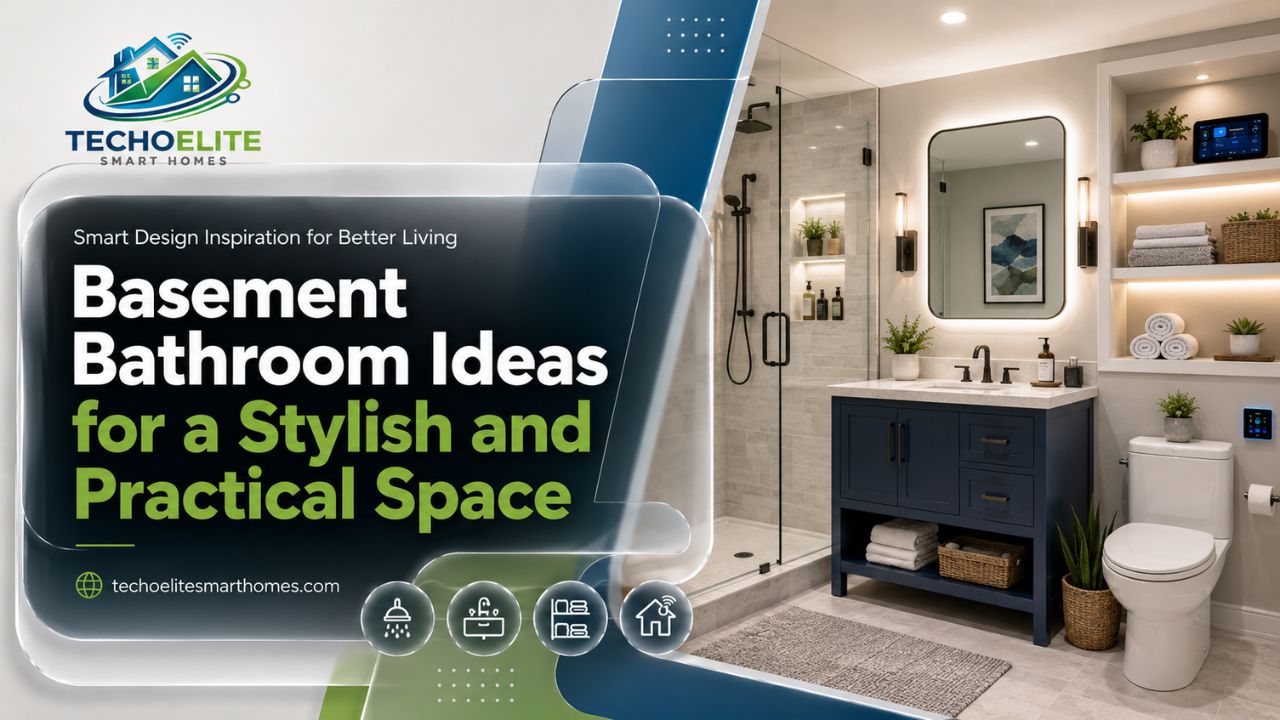
Most basements have one awkward truth: they hold a lot of potential, but they rarely feel easy to design. The right basement bathroom ideas can turn a dark, underused lower level into a guest-ready, family-friendly, and genuinely valuable part of your home.
A basement bathroom matters because it changes how the entire floor works. A finished basement with a bathroom can support a guest suite, home office, gym, playroom, rental-style in-law space, or movie room without sending everyone upstairs.
The challenge is that basements are different from bathrooms on the main floor. You’re working with lower ceilings, concrete slabs, moisture concerns, utility lines, and sometimes tricky drainage. That doesn’t mean the project has to feel overwhelming. It just means the best design starts with practical decisions before the pretty ones.
Start With the Basement You Actually Have
Before you save tile samples or choose a vanity, spend time looking at the room with a builder’s eye. A basement is often shaped by things you can’t easily move: support posts, ductwork, beams, floor drains, water heaters, electrical panels, and existing sewer lines.
I’ve seen homeowners fall in love with a layout that looked perfect on paper, only to discover the toilet needed to sit on the opposite wall because of drainage. That’s a costly lesson. A smarter approach is to mark the immovable features first, then design around them.
Check moisture before design
Basements naturally deal with more humidity than upper floors because they sit below grade. Look for musty smells, white mineral stains on concrete, peeling paint, dark corners, or damp spots after heavy rain.
A bathroom adds more moisture to the space, so existing dampness should never be ignored. In most cases, you’ll want to solve grading, gutters, cracks, or interior humidity problems before adding drywall, flooring, or cabinetry.
Measure ceiling height honestly
A low ceiling doesn’t ruin a bathroom plan, but it does affect choices. Recessed lights, shallow exhaust fans, frameless shower glass, and low-profile fixtures can help the room feel less compressed.
Pay special attention to the shower area. Even if the rest of the basement feels comfortable, a shower under a beam or duct can feel cramped fast. A few inches can change the whole experience.
Keep access to utilities
A bathroom wall can hide pipes, valves, and cleanouts, but it shouldn’t trap them forever. Use access panels where needed and avoid building permanent cabinetry over anything a plumber may need to reach later.
This is especially important in older homes where shutoff valves, cast iron pipes, or main cleanouts may already be in the basement. Good design respects future maintenance.
Smart basement bathroom ideas for Layout and Flow
The best basement bathroom ideas usually begin with one question: who will use this bathroom most often? A guest staying overnight has different needs than kids coming in from a playroom, someone using a home gym, or relatives visiting during holidays.
When the purpose is clear, the layout becomes easier. You can decide whether the space needs a shower, how much storage matters, and whether privacy should be a priority.
Powder room for casual use
A powder room is the simplest option when your lower level serves as a media room, game room, workshop, or office. It usually needs only a toilet and sink, which keeps the footprint small and the plumbing simpler.
For many homes, a half bath can fit under the stairs, beside a utility room, or near a basement entry. A pocket door or outswing door can save precious floor space.
Three-quarter bath for guests
A three-quarter bath includes a toilet, sink, and shower. This is often the sweet spot for finished basements because it makes the lower level feel self-contained without requiring the square footage of a tub.
If you’re creating a guest bedroom, a shower is usually worth the investment. It lets visitors stay comfortably and gives your home more flexibility when family routines get busy.
Full bath for a basement suite
A tub makes sense when the basement may be used by children, long-term guests, or a multigenerational household. It can also help if the basement bedroom functions like a small apartment-style suite.
Still, a full tub needs space, careful waterproofing, and more planning. If the room feels tight, a shower with a built-in bench may be more comfortable than a cramped tub.
One of the most practical basement bathroom ideas is to keep the wet wall close to existing mechanical lines. A wet wall is the wall that carries plumbing for the toilet, sink, and shower. Grouping fixtures along one or two nearby walls can reduce labor, avoid unnecessary concrete cutting, and make future repairs easier.
Plan the Plumbing Before You Pick the Tile
Plumbing is the part of a lower-level bathroom that surprises people most. On the main floor, gravity usually helps wastewater move down and out. In a basement, the drain may sit below the main sewer line, which means the system may need help pushing waste upward.
That’s why basement bathroom plumbing deserves early attention. A licensed plumber can determine whether gravity drainage will work, whether the concrete slab needs cutting, or whether you’ll need a pump system.
Gravity drainage versus pump systems
Gravity drainage is usually the cleanest solution when the main sewer line is low enough. The plumber opens the slab, connects new drain lines, sets the proper slope, and patches the concrete.
When gravity won’t work, basement bathroom plumbing may require an ejector pump or an upflush system. An ejector pump collects wastewater in a sealed basin and pumps it up to the main drain. An upflush toilet system grinds and pumps waste from a special toilet unit, often with less slab work.
Venting and drain slope matter
A bathroom drain system needs proper venting so water flows smoothly and sewer gases stay out of the house. Poor venting can lead to slow drains, bubbling toilets, or odors that seem to come and go.
Drain slope also matters. Too little slope and waste may not move well. Too much slope and water can outrun solids. These details are exactly why basement bathroom plumbing should not be treated as guesswork.
Sump pumps, sewage ejectors, and backups
If your basement already has a sump pit, don’t assume it can handle bathroom waste. A sump pump moves groundwater, while a sewage ejector handles toilet and shower wastewater. They are not interchangeable.
In most cases, basement bathroom plumbing should include a conversation about check valves, alarms, backup power, and access for future pump replacement. A pump hidden behind a beautiful wall is still a pump that may need service someday.
Permits protect you later
Permit rules vary by city and county, but bathrooms usually involve plumbing, electrical, ventilation, and sometimes structural review. A permit may feel like an extra step, yet it can protect your home’s value and make resale smoother.
The International Residential Code and local building departments influence many bathroom requirements, but your local authority has the final say. It’s worth asking before work begins rather than fixing mistakes after inspection.
Lighting, Ventilation, and Moisture Control
A basement bathroom can look expensive and still feel uncomfortable if the lighting is flat or the air feels damp. These are the details people notice immediately, even if they can’t name the problem.
A window is a bonus, but many basement bathrooms have no natural light at all. That means artificial lighting and ventilation need to work harder.
Layer lighting instead of relying on one fixture
Use at least two lighting layers if the room allows it. Overhead lighting gives general brightness, while vanity lighting helps with grooming and makes the mirror area feel inviting.
Wall sconces at face height are flattering, but they need enough clearance. If space is tight, a backlit mirror or vertical LED bars can make the room brighter without crowding the walls.
Choose the right fan
A bathroom fan should move humid air out of the house, not into a joist bay or unfinished corner. A quiet fan is usually worth the upgrade because people actually use it.
Look for features like humidity sensing, low sone ratings, and timer switches. In a basement, small improvements in ventilation can prevent bigger problems with odor, mildew, and paint failure.
Design with water in mind
Water-resistant materials matter more below grade. Cement board behind tile, waterproof membranes in showers, moisture-resistant drywall outside wet areas, and quality caulking around fixtures all help the room last.
Paint also deserves attention. Choose a bathroom-rated finish that can handle cleaning and humidity without looking shiny in a harsh way.
Once the technical pieces are handled, the room starts to feel less like a basement project and more like a real design opportunity.
Small basement bathroom ideas that Make Tight Spaces Feel Bigger
Small basement bathroom ideas work best when every inch has a job. The goal isn’t to cram in more features; it’s to remove visual clutter and make the room feel intentional.
A compact bathroom can still feel polished if the lines are clean, the lighting is warm, and storage doesn’t fight the floor plan. In fact, smaller rooms often look more finished because the design choices are concentrated.
Use wall-mounted fixtures where possible
A wall-hung vanity or floating sink exposes more floor, which makes the room feel lighter. It also makes cleaning easier, especially around tight corners.
Wall-mounted toilets can save space too, though they usually cost more and require framing that supports the in-wall tank. They’re not right for every budget, but they can be excellent in a narrow room.
Choose glass carefully
Clear glass makes a shower feel larger than a curtain or frosted panel. A fixed glass panel can be easier than a full door in a small bathroom because it avoids swing clearance.
For privacy, use texture elsewhere instead of blocking the whole shower. Ribbed glass, vertical tile, or a warm wood vanity can add interest without shrinking the room visually.
Let tile stretch the room
Large-format tile can reduce grout lines and make a compact space calmer. Running rectangular tile vertically can lift a low ceiling, while horizontal layouts can make a narrow wall feel wider.
One of my favorite basement bathroom ideas for tight rooms is using the same tile on the shower floor edge and main floor color family. It creates continuity, even when the actual square footage is modest.
Build storage into dead zones
Recessed medicine cabinets, shower niches, over-toilet shelving, and shallow wall cabinets can keep daily items off the vanity. Avoid bulky linen cabinets unless the room truly has the space.
A small bath doesn’t need to store everything. It needs to store the right things: toilet paper, hand soap, towels, cleaning supplies, and guest basics.
Materials, Fixtures, and Finishes That Can Handle Basement Conditions
Basement bathrooms benefit from finishes that are attractive but forgiving. You want materials that handle humidity, occasional temperature swings, and frequent cleaning without looking worn after a few seasons.
This is where practical choices can still look beautiful. Durable doesn’t have to mean dull.
Flooring that makes sense below grade
Porcelain tile is a common favorite because it’s water-resistant, durable, and available in endless looks. Luxury vinyl plank can also work well in many basement spaces, especially outside the shower area, because it feels warmer underfoot and handles moisture better than many wood-based products.
Avoid materials that swell easily when exposed to moisture. If you love the look of hardwood, consider porcelain wood-look tile or high-quality vinyl instead.
Vanities that won’t suffer
A vanity in a basement bathroom should have a sturdy finish and enough clearance from wet zones. Solid wood, plywood construction, and quality sealed finishes usually perform better than cheap particleboard in humid spaces.
A raised vanity on legs can feel more furniture-like, while a floating vanity feels modern and airy. Both can work if the size fits the room.
Shower walls that stay cleaner
Acrylic and solid-surface shower panels can reduce grout maintenance. Tile gives you more design freedom, but grout needs sealing and regular cleaning.
If you choose tile, larger pieces and epoxy or high-performance grout can reduce maintenance. In a basement, easier cleaning often means the bathroom stays pleasant longer.
Hardware and fixtures
Matte black, brushed nickel, chrome, and brass can all work. The real trick is consistency. Pick one dominant finish and repeat it across the faucet, shower trim, towel bar, and mirror frame.
Mixing finishes can look great, but too many in a small room quickly feels accidental. Two finishes are usually enough.
Style Directions That Feel Warm, Not Underground
A basement bathroom should not feel like an afterthought attached to a utility room. With the right palette and texture, it can become one of the coziest rooms in the house.
Because basements receive less daylight, colors often read darker than they do upstairs. Test paint and tile samples under the actual lights you plan to use.
Warm modern
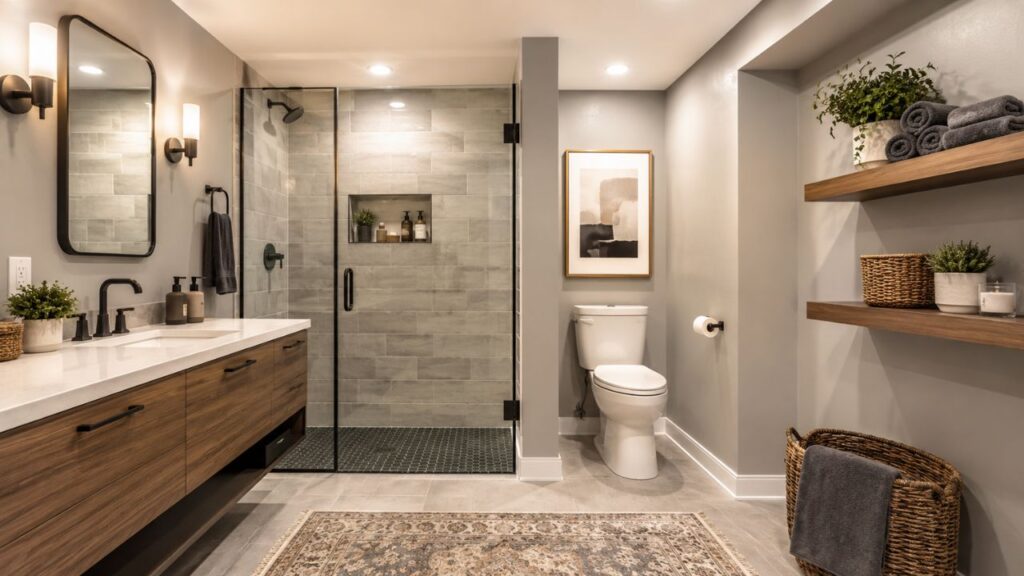
Warm modern design blends clean lines with soft materials. Think creamy walls, wood vanities, simple black or nickel fixtures, and stone-look tile.
This style works well because it avoids visual clutter while still feeling comfortable. It’s especially useful when the basement connects to a family room or guest suite.
Classic and timeless
White subway tile, marble-look porcelain, chrome fixtures, and a simple shaker vanity create a bathroom that won’t feel dated quickly. Add warmth with a wood mirror, woven basket, or warm white lighting.
A timeless look is a safe choice if resale matters. It gives future buyers a room that feels finished without being overly specific.
Moody and dramatic
A basement can handle drama if the lighting is good. Deep green, charcoal, navy, or clay-colored walls can make a powder room feel intentional and stylish.
The key is contrast. Pair dark walls with a bright mirror, polished fixtures, and enough light at the vanity so the room feels cozy instead of cave-like.
Good basement bathroom ideas don’t copy a showroom exactly. They respond to the home, the people using the space, and the practical limits of the lower level.
Budget-friendly basement bathroom ideas and Common Mistakes
Budget-friendly basement bathroom ideas don’t always mean choosing the cheapest products. More often, they mean spending money where mistakes are expensive and saving where updates are easy.
Plumbing, waterproofing, ventilation, electrical safety, and permits deserve priority. Mirrors, paint, hardware, towel hooks, and even some lighting can be upgraded later.
Where to spend
Spend on basement bathroom plumbing, waterproofing behind wet areas, a reliable fan, safe electrical work, and a well-installed toilet and shower. These pieces affect how the room functions every day.
A beautiful faucet won’t matter if the shower leaks or the drain smells. Start with the parts hidden behind the walls.
Where to save
You can save on ready-made vanities, simple mirrors, standard tile layouts, open shelving, and paint. A basic vanity can look elevated with a good faucet, attractive hardware, and thoughtful lighting.
Keep tile patterns simple if labor costs are tight. Intricate layouts can take more time and create more waste.
Mistakes that cost more later
The most common mistake is treating a basement bath like an upstairs bath. The plumbing, moisture, and ventilation needs are different, so shortcuts show up quickly.
Another mistake is ignoring storage. Even a guest bath needs a place for extra paper, towels, and cleaning items. Without storage, the room feels unfinished no matter how nice the tile looks.
A third mistake is poor lighting. One ceiling fixture in a windowless room creates shadows and makes finishes look flat. Good lighting can make modest materials feel expensive.
Making the Bathroom Work With the Rest of the Basement
A bathroom should feel connected to the lower level, not like a random box tucked in the corner. Think about what people see from the hallway, where towels will go, and how the door swing affects furniture nearby.
If the bathroom sits near a guest bedroom, sound privacy matters. Insulation in interior walls and a solid-core door can make the space feel more comfortable.
Match the mood of nearby rooms
If the basement family room is warm and casual, the bathroom should not feel cold and clinical. Use similar wood tones, metal finishes, or paint undertones to create flow.
For a gym or utility-focused basement, the bathroom may need more durable surfaces and brighter lighting. For a guest suite, comfort and softness matter more.
Think about nighttime use
Guests may use the bathroom at night, so lighting should feel gentle but safe. A dimmable fixture, motion-sensor toe-kick light, or soft night-light outlet can make the room easier to navigate.
These little details often separate a basic basement bathroom from one that feels thoughtfully designed.
Leave room for future changes
Families change, and basements change with them. A playroom becomes a teen hangout, a storage area becomes an office, and a guest room may become a long-term family space.
Design with enough flexibility that the bathroom still works five or ten years from now. Neutral permanent finishes and changeable decor are a smart balance.
Frequently Asked Questions
What are the best basement bathroom ideas for a low ceiling?
Low ceilings need visual lift, so use recessed lighting, vertical tile, a frameless mirror, and light-reflecting finishes. In low-ceiling spaces, basement bathroom ideas should avoid bulky shower headers, oversized pendant lights, and dark ceilings unless the room has excellent lighting.
How long does it take to add a bathroom in a basement?
A simple half bath may take a few weeks once work starts, while a full bathroom with concrete cutting, inspections, shower waterproofing, and custom finishes can take longer. The timeline depends heavily on permit approvals, plumbing complexity, and contractor availability.
Does a basement bathroom increase home value?
In many markets, a well-built bathroom makes a finished basement more useful and appealing to buyers. The value depends on your neighborhood, the quality of the work, and whether the bathroom supports a bedroom, guest suite, or entertainment area.
Can I add a basement bathroom without breaking concrete?
Sometimes, yes. Upflush toilet systems and certain pump-based layouts can reduce or avoid slab cutting. They still need correct installation, venting, electrical access, and maintenance planning, so they aren’t a shortcut around professional advice.
Is a shower better than a tub in a basement bathroom?
A shower is usually more practical when the basement serves guests, teens, or a home gym. A tub may be better if children will use the space often or if the basement functions like a separate living suite.
What should I ask a contractor before starting?
Ask about permits, drainage method, ventilation route, waterproofing approach, electrical upgrades, inspection steps, and access to pumps or cleanouts. You should also ask who handles each trade and how changes will be priced if hidden issues appear.
Can heated floors work in a basement bathroom?
Heated floors can work beautifully under tile and make a basement bath feel much more comfortable. Electric radiant mats are common for small bathrooms, but they need proper installation, compatible flooring, and safe electrical planning.
How do I keep a basement bathroom from smelling musty?
Control humidity first with a properly vented fan, then check for standing water, slow drains, and poor air circulation. If odors continue, have the plumbing traps, ejector system, and venting checked because smells often point to a technical issue rather than a cleaning problem.
Final Thoughts on Creating a Basement Bathroom That Works
A great lower-level bath is a balance of comfort, code-aware planning, and design restraint. The room should feel inviting, but it also has to handle moisture, drainage, ventilation, and daily use without becoming a maintenance headache.
The smartest basement bathroom ideas are the ones that fit your actual basement instead of forcing a magazine layout into a space that can’t support it. Once the plumbing path, airflow, lighting, and waterproofing are right, the finishes become much more enjoyable to choose.
Done well, this small room can change the way your whole home lives. It can turn an unfinished corner into a guest-ready retreat, make family routines easier, and give your basement the kind of polish that people notice the moment they walk downstairs.