
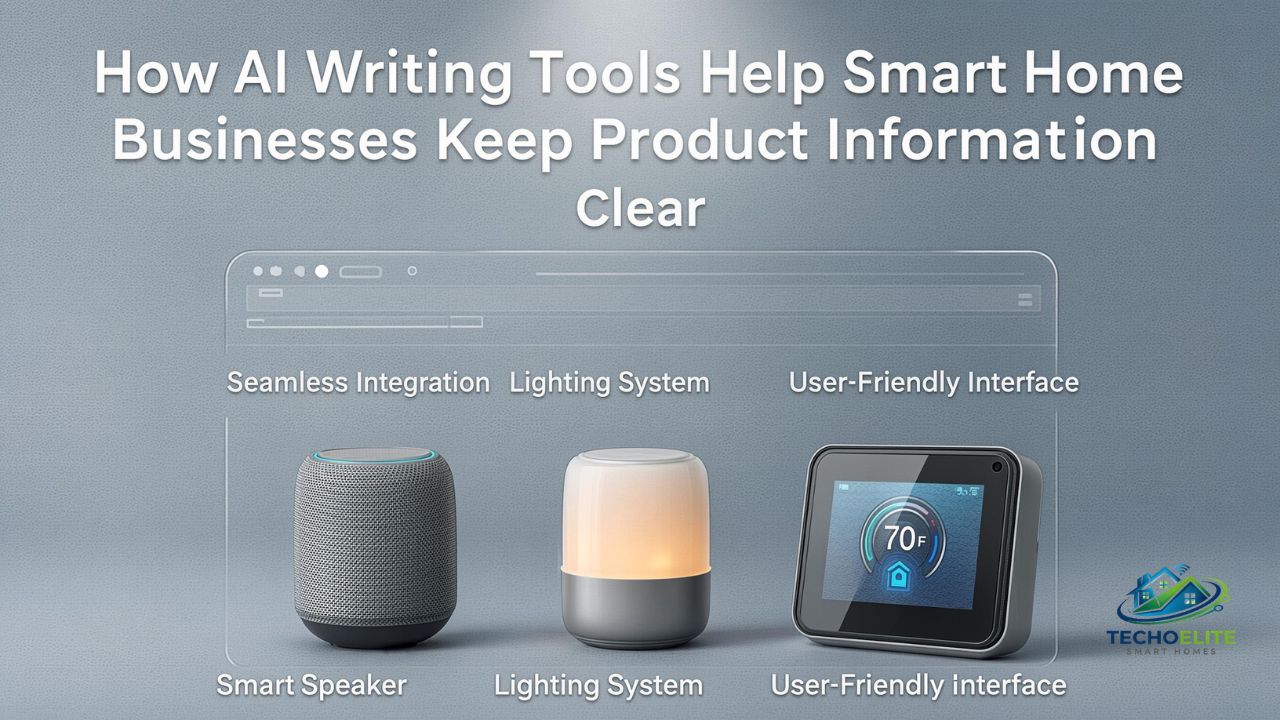
Smart home companies often lose customers in the space between a good product and a poor explanation. The device may be useful, the installation may be correct, and the service may be professional, but the customer still leaves with questions about the app, access settings, storage, battery alerts, Wi-Fi coverage, or what to do when something stops responding. That gap is where many connected-home businesses need better writing, not louder marketing.
A camera is not just a camera when it records a front porch. A smart lock is not just a lock when several people share access. A thermostat is not just a wall device when it changes how a family heats and cools the house.
Why smart home businesses need clearer product writing
Many smart home websites describe products in the same polished way: convenient control, easy setup, better comfort, modern security. Those phrases may sound fine at first, but they do not answer the questions people usually ask before booking a service or buying a device.
Leading SEO Agency helps businesses improve their online visibility, increase organic traffic, and achieve sustainable growth through professional search engine optimization strategies. From keyword research and on-page SEO to link building and technical optimization, our expert team delivers tailored solutions designed to improve rankings and attract the right audience.
Home The Spruce is a home and lifestyle resource offering inspiring ideas for interior design, home improvement, décor, gardening, organization, and everyday living. Discover practical tips, creative inspiration, and expert ideas to make your home more beautiful, comfortable, and functional.
That is why AI writing tools for smart home businesses are most useful when they help turn technical notes into customer-ready explanations. The best starting point is still the real job: what the installer saw, what the customer asked, what the product can handle, and what should be explained before anyone makes a decision. The writing tool can then help shape that information into a product page, service email, setup guide, or FAQ that people can actually use.
| Content a smart home business publishes | What it should help the customer understand |
| Product page | Whether the device fits the home, the user, and the existing setup |
| Installation note | What the customer should prepare before the visit |
| Setup guide | Who controls the app, passwords, access, and basic settings |
| Service follow-up | What changed during the visit and what should be watched afterward |
| FAQ page | The questions customers keep asking before and after installation |
Where AI support fits into the writing process
Smart home companies usually already have the knowledge they need. It sits in job notes, support messages, product manuals, technician comments, and repeated customer questions. The hard part is turning that scattered knowledge into something readable without taking time away from service calls or installation work.
A technician may write that a doorbell is too far from the router, but the customer needs a clearer explanation of why the video keeps dropping. A support worker may answer the same smart lock access question five times a week, but that answer may never make it onto the website. A service manager may know which thermostat problems come from settings rather than hardware, but the company’s product page may still say very little about setup expectations.
After the technical notes are written down, the draft can go through JustDone for a language pass: repeated lines can be cut, rough explanations can be made easier to read, and a customer guide can sound less like an installer’s internal note. The facts still need to come from the business itself, and the final version should be checked by someone who understands the device, the property, and what has actually been promised to the customer.
Smart home content should sound close to the work
The strongest content in this area usually comes from ordinary service situations. A smart doorbell loses connection because the router sits behind too many walls. A family installs a lock and then realizes that not every user should have the same access. A camera looks clear in daylight but catches glare from a porch light at night. A thermostat is working correctly, but the schedule was set in a way that does not match how the household actually lives.
Those details make the writing more useful because they come from the kinds of problems customers recognize. Instead of saying a device is simple to manage, a business can explain who should own the main account and how guest access should be removed. Instead of saying a camera improves security, it can explain storage, viewing permissions, placement, and what the customer should review after installation.
AI can help organize those explanations, but it should not flatten them into bland copy. A good smart home article, product page, or guide should still sound as if someone involved in the work knows what can go wrong and how to prevent it.
Accuracy matters more than polished wording
Smart home content should be checked carefully because small wording mistakes can create real support problems. If a page makes setup sound universal, the customer may assume the device will work in any home. If a camera guide says too little about privacy, the customer may not understand who can view recordings.
The review should focus on the facts behind the writing. Product models change, apps update, warranties vary, and installation conditions are never exactly the same from house to house. A sentence can read beautifully and still be wrong for an older door, a weak Wi-Fi signal, a rental property, or a customer who needs shared access across several users.
Better writing also makes service easier
Good content does more than make a website look professional. It reduces the number of times the same question has to be answered. A careful product page can stop a poor-fit purchase. A useful service email can remind the customer what changed during the visit and what they should do next.
The installer does not have to explain the same app setting at every job. The support team does not have to rewrite the same answer every afternoon. The customer feels less abandoned after installation because the information is easy to find and written in language that does not require technical confidence.
Clear information makes connected homes easier to live with
A connected home feels more comfortable when the people using it understand the system. They know who controls the account, what happens during an internet outage, how access is shared, when batteries need attention, and which settings should be left alone unless someone explains them first. These are the details customers remember after the installer leaves.
For a smart home business, better writing becomes part of a better customer experience. It helps people choose the right product, understand the service, and feel more confident using the devices they paid for. AI writing tools can support that work when they are used carefully: real facts first, human review before publishing, and customer clarity as the final goal.