The modern backyard is no longer treated as a separate part of the home that only gets attention during summer barbecues or weekend chores. It has become an extension of daily living, shaped by the same priorities that drive interior upgrades: convenience, efficiency, comfort, and long-term value. Homeowners who want a backyard that looks polished while functioning better year-round are increasingly turning to exterior renovation services by Turft to explore design options that blend low-maintenance surfaces, practical layouts, and outdoor living improvements into one cohesive plan. Smart outdoor design is not just about adding gadgets to a patio. It is about rethinking how the backyard works, how much upkeep it requires, and how easily it adapts to modern routines.
Outdoor Spaces Are Becoming Functional Living Zones
One of the biggest shifts in backyard design is the move away from single-purpose lawns toward multi-use outdoor spaces. Instead of treating the yard as a patch of grass that needs constant maintenance, homeowners are creating areas for dining, relaxing, entertaining, and family activities. This approach makes the backyard feel more intentional and far more useful throughout the week.
Smart outdoor design starts with asking how the space will actually be used. A family may want room for children to play, a quiet corner for morning coffee, and a patio that can handle regular entertaining without feeling crowded. When each zone is designed around a real purpose, the backyard becomes a practical extension of the home rather than a leftover area behind it.
Technology Is Making Backyards Easier to Manage
The growth of outdoor technology has changed what homeowners expect from their yards. Features like app-controlled lighting, automated irrigation, weather-aware watering systems, and outdoor speakers can now be integrated into a backyard without making it feel overly technical. These upgrades add convenience while reducing the amount of manual work needed to keep the space comfortable and functional.
Lighting is one of the clearest examples of how smart design improves everyday use. Path lights can be programmed to turn on at sunset, entertainment areas can shift to softer evening settings, and security lighting can respond to motion without wasting energy all night. When technology is used thoughtfully, it supports the design instead of distracting from it.
Low-Maintenance Materials Are Driving Better Design Choices
Another major change in the modern backyard is the focus on materials that reduce upkeep without sacrificing appearance. Homeowners are becoming more selective about surfaces, plant choices, and layout decisions because they want outdoor spaces that remain attractive without demanding hours of maintenance every week. That shift has made durability and ease of care just as important as style.
Artificial turf, permeable pavers, composite decking, and drought-conscious planting plans all fit into this smarter approach to outdoor design. These features help reduce mowing, watering, trimming, and seasonal wear while still creating a finished, high-end look. Instead of building a yard that looks great for one season and then becomes difficult to maintain, homeowners are choosing options that support both beauty and practicality over time.
Smart Design Improves Comfort in Every Season
A well-designed backyard should feel usable in more than one season, and that is where smart planning has a major impact. Shade structures, strategic planting, outdoor heating elements, and lighting placement can all make a backyard more comfortable from morning through evening and from one season to the next. Comfort is no longer seen as a bonus feature. It is part of the foundation of good outdoor design.
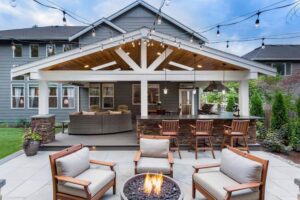
For example, a patio that receives harsh afternoon sun may benefit from a pergola, shade sail, or nearby planting that softens the heat without closing off the space. In cooler months, subtle additions like a fire feature or wind-blocking layout can help the backyard stay inviting longer. These details allow homeowners to get more value from the space because it remains useful beyond a narrow weather window.
Design and Curb Appeal Are Now Closely Connected
Backyard design is also being shaped by the growing expectation that the exterior of a home should feel just as finished as the interior. A modern home with updated finishes, clean lines, and smart technology inside can feel incomplete if the backyard still looks disconnected or neglected. As a result, outdoor design is increasingly being approached as part of the overall property experience.
This does not mean every backyard needs an expensive overhaul. Often, the biggest improvements come from creating a cleaner layout, reducing visual clutter, and using a consistent mix of materials that tie the outdoor space together. Smart outdoor design works because it considers how the backyard looks, how it functions, and how it supports the homeowner’s lifestyle at the same time.
The Best Backyards Are Designed Around Real Life
The most successful modern backyards are not built around trends alone. They are designed around the habits, priorities, and routines of the people who use them every day. A household with pets, children, frequent guests, or a demanding work schedule will need something different from a homeowner who wants a quiet outdoor retreat, and smart design takes those realities into account from the beginning.
That is why the modern backyard is changing so quickly. Homeowners are no longer satisfied with outdoor spaces that look decent from a distance but create more work than enjoyment. They want backyards that are easier to manage, more flexible to use, and better aligned with the way they live. Smart outdoor design meets that demand by combining comfort, efficiency, and visual appeal into one thoughtful plan that makes the backyard feel like a true part of the home.