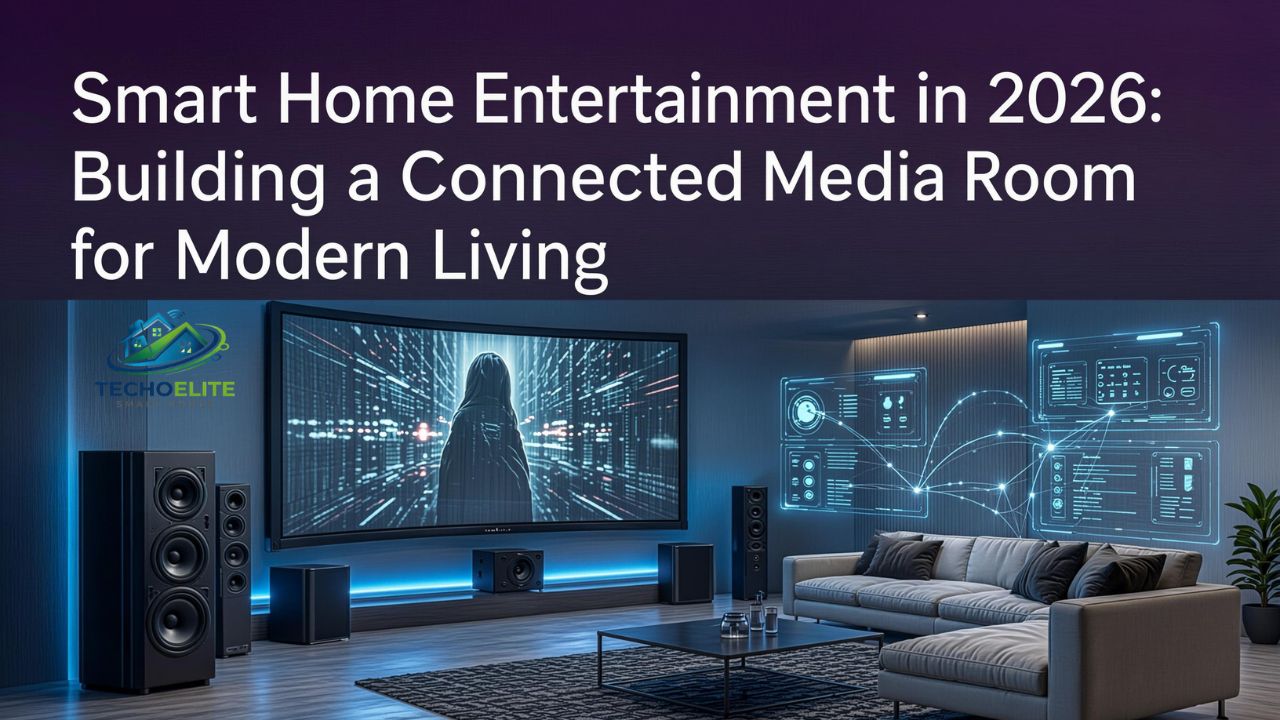
The modern smart home has evolved well beyond color-changing bulbs and voice-activated thermostats. Today’s most sought-after upgrade is the connected media room — a space where lighting, sound, and screens sync automatically based on what’s playing, who’s in the room, and even the time of day. As smart TVs, streaming boxes, and home theater receivers become more interoperable, homeowners are discovering that a handful of well-chosen upgrades can transform an ordinary living room into a genuinely cinematic experience without requiring a full renovation.
Start With the Screen, But Think Beyond It
A 4K or 8K display is the obvious centerpiece of any smart entertainment setup, but the real upgrade happens in how that screen is fed. Picture quality is only as good as the source feeding it, and a stunning panel paired with a weak signal or a clunky interface will always feel like a downgrade. Streaming quality also depends heavily on bandwidth stability and the breadth of content available through a single interface, which is why so many households are rethinking how many separate apps and subscriptions they’re juggling just to watch television.
Many smart home owners are now consolidating their viewing through IPTV-style services that bundle thousands of live channels and on-demand titles into one app, rather than switching between five or six different platforms every evening. Services like Watch4K cater to exactly this shift, offering centralized access to international channels and on-demand libraries that pair well with a dedicated home theater setup, especially when combined with mesh Wi-Fi or wired backhaul to keep 4K streams buffer-free. The fewer apps a household has to open to find something to watch, the more a media room feels genuinely “smart” rather than just expensive.
Automate the Room, Not Just the Remote
The real magic of a smart media room isn’t the TV itself — it’s everything happening around it. Motorized blinds that lower automatically when a movie starts, ambient lighting that dims to a warm amber tone the moment playback begins, and multi-room audio that follows you from kitchen to living room are all achievable with today’s smart hubs, and increasingly at a price point that doesn’t require an electrician on retainer.
Matter and Thread-based ecosystems have made it far easier to get devices from different brands talking to each other. A Philips Hue lighting scene, a Lutron shade, and a Sonos speaker can now respond to the same trigger without needing three separate apps open at once. The practical result is that a lighting automation can fire the moment your streaming app starts playing, rather than requiring you to manually dim the room with a separate remote or app switch. For households still relying on individual smart plugs and disconnected routines, this kind of cross-brand coordination is usually the single biggest quality-of-life upgrade available.
Sound Still Matters More Than People Think
Even with a stunning display, weak audio undercuts the entire experience. Dialogue that’s hard to follow or a soundtrack that feels flat can make an otherwise excellent 4K picture feel cheap. A soundbar with virtual surround processing, or a compact 5.1 system synced wirelessly to the TV, can close that gap without requiring a full rewiring project or visible cable runs across the ceiling.
Smart speakers that integrate directly with your TV’s operating system also allow voice control over volume, input switching, and playback — a small convenience, but a genuinely useful one when your hands are full of popcorn or a remote has gone missing under the couch cushions yet again. As more TVs ship with built-in voice assistants, the line between “smart speaker” and “TV remote” continues to blur, and that’s generally good news for anyone trying to keep their living room setup simple.
When Home Comfort Meets Life Abroad
Interestingly, the appeal of a beautifully automated home isn’t limited to the property someone currently lives in. A growing number of smart home enthusiasts are also investors in second properties abroad — vacation homes or income properties in places where the lifestyle, climate, and tax environment offer a genuine change of pace from their primary residence. It’s a natural extension of the same instinct that drives a great media room: wanting comfort, convenience, and a sense of control over your environment, wherever that environment happens to be.
For those exploring real estate and residency options in the Caribbean, firms like Citizens International specialize in matching property investment with citizenship-by-investment programs, letting buyers combine a smart, automated retreat with the broader benefits of a second passport. Many of the properties involved in these programs are newly built or recently renovated, which makes them ideal candidates for the same kind of connected-home features people are installing domestically — automated lighting, app-based security, and centralized entertainment systems that work identically whether the property sits in a familiar suburb or on a beach a flight away. It’s a reminder that the “smart home” concept increasingly travels with its owner, rather than staying fixed to a single address.
Keep It Simple to Keep It Reliable
The biggest mistake people make when building out a smart home entertainment setup is over-complication. It’s tempting to buy every connected gadget at once, but a system with too many moving parts is also a system with too many failure points. Start with one or two integrations — a streaming hub paired with a single lighting scene, for instance — before layering in more devices over time. A media room that works reliably with three automations will always beat one with fifteen that occasionally glitch, drop connection, or require a factory reset mid-movie.
As your comfort with the ecosystem grows, you can expand into multi-room audio, automated climate zones, and tighter integration between your streaming sources and your lighting or shading systems. The goal isn’t necessarily to add more technology — it’s to remove friction. A truly smart media room is one where you stop thinking about the technology at all, and simply enjoy the show.
The Bigger Picture
A connected entertainment space is ultimately about closing the gap between you and the content you want to watch, in the environment you want to watch it in. For some households, that means a single well-automated living room. For others, it means replicating that same comfort across two homes, two climates, and sometimes two passports. Either way, the underlying principle is the same: good technology should disappear into the background, leaving only the experience it was designed to create.